Chuseok
FestivalEast Asia · Korea
No rule yet
Nobody has written a rule for this observance yet, so the calendar does not put it on a day. A name with a made-up date beside it would be worse than a name on its own.
In short
The Korean harvest, when families return home to the graves.
The story
Chuseok is Korea's important autumn harvest and ancestor-remembrance festival, observed around the full moon of the eighth month in the Korean lunisolar calendar. Families travel to their home regions and gather to thank earlier generations, share the seasonal harvest and renew relationships. Its background includes older agricultural customs and historical traditions rather than one universally accepted founding myth.
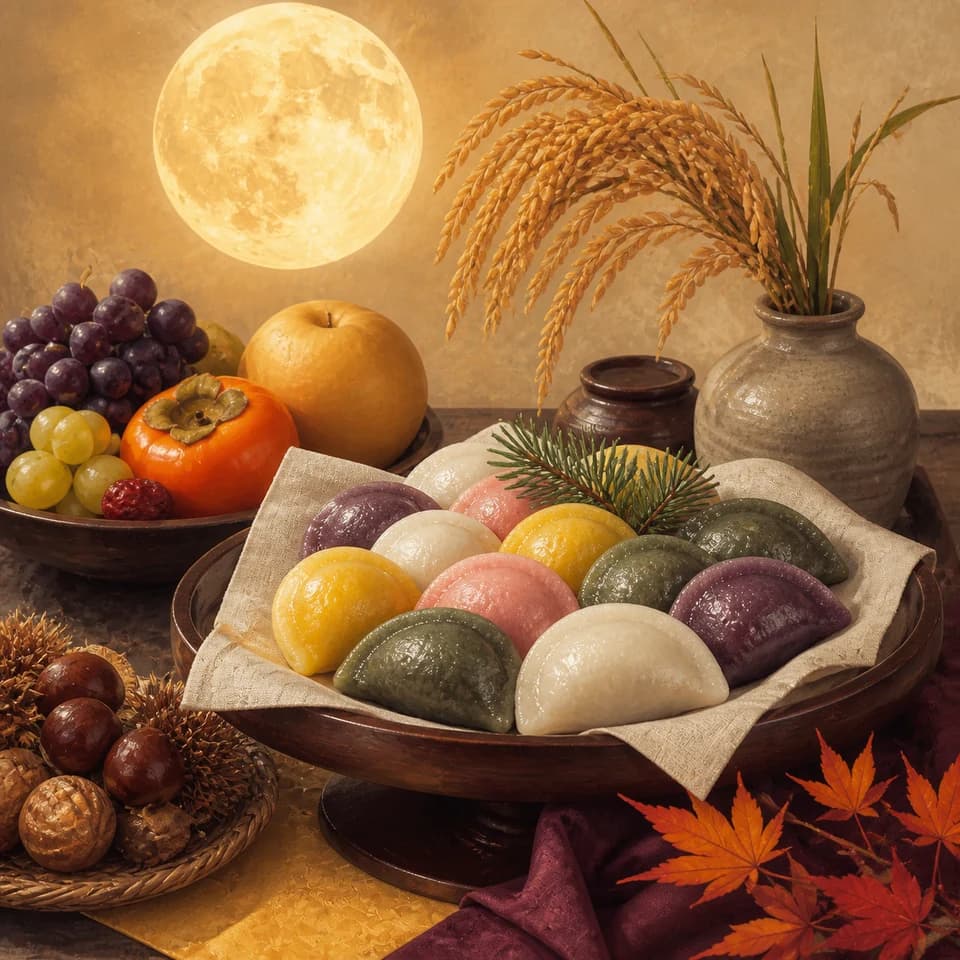
Many households prepare songpyeon, crescent-shaped rice cakes traditionally steamed with pine needles, along with fruit and seasonal dishes. Some families perform charye, a remembrance ceremony with food offerings to ancestors, and visit family graves for seongmyo and tending the grounds. Such rituals vary according to faith, generation and family; not every Korean household practises them in the same way. Music, games and dances may accompany the gathering.
Chuseok spans public holidays around the full moon, but the number of days and substitute holidays depend on contemporary Korean law. It is sometimes called Korean Thanksgiving, though its ancestor rites and distinctive food traditions make that translation incomplete. The database currently lacks a Korean lunisolar date rule and must not invent one from a Hindu month or fixed Gregorian day.
Why it matters
The harvest full moon, and the year's principal duty to the ancestors. Families return to the ancestral home, perform charye with the new grain, and go out to the graves to cut the summer's grass - beolcho, which is work rather than ceremony and is the part nobody may skip. Songpyeon are shaped by hand the night before.
What people do
Charye in the morning with the new grain, then beolcho - the family graves cleared of summer growth - and seongmyo, the visit itself. Songpyeon, half-moon rice cakes steamed over pine needles, are made the night before by the whole household.
Told differently elsewhere
Falls on the same full moon as the Mid-Autumn Festival in China and Tsukimi in Japan, but is kept as a homecoming rather than a moon-viewing. Songpyeon fillings and the ganggangsullae circle dance of the south-west are regional.