Dattatreya Jayanti as it was kept in 2003.
Next date: 23 December 2026Dattatreya Jayanti 2003
Monday, 8 December 2003, in Ahmedabad
Birth anniversaryIndian · Hindu
Panchang on the day
8
Monday
Full Moon
until 02:06 next day
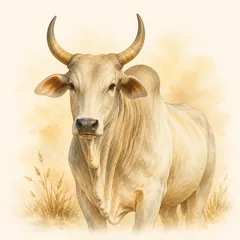
Taurus
- બBa
- વVa
- ઉU
Puja time
17:55 to 20:19
At dusk, IST
- Sunrise
- 07:07
- Sunset
- 17:55
- Moonrise
- 17:30
- Nakshatra
- Rohini
- until 03:57 next day
- Yoga
- Siddha
- until 17:04
- Karana
- Vishti
- until 12:48
- Rahu Kalam 08:28 to 09:49
- Yamaganda 11:10 to 12:31
- Abhijit muhurat 12:09 to 12:52
Why this date
Margshirsh Full Moon, taken at dusk
Runs from 7 Dec 23:27 IST to 9 Dec 02:06 IST.
In short
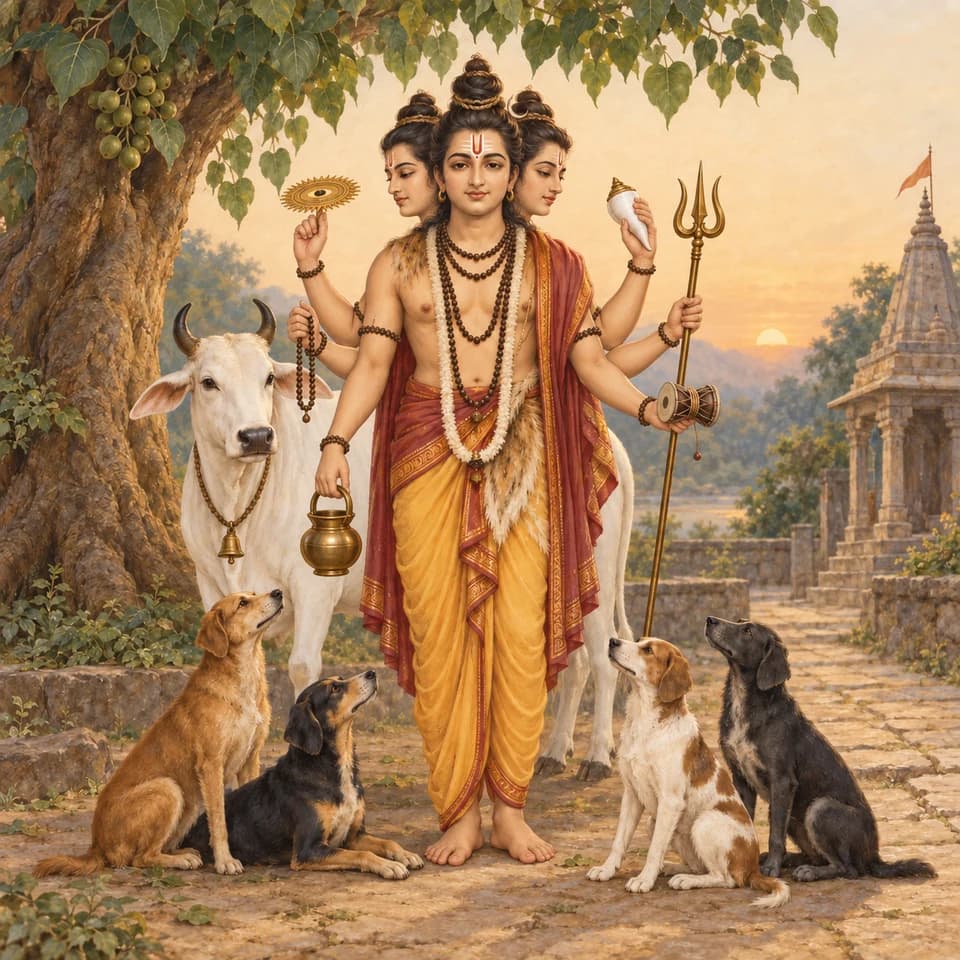
Dattatreya Jayanti is celebrated on the full moon of Margashirsha. Devotees worship Lord Datta, sing devotional songs and remember the guidance of the guru. The Bhagavata links his birth to the blessing received by sage Atri and Anasuya.
The story
Sage Maitreya was telling Vidura about the lineages of the sages. He said that Atri's wife Anasuya had three sons named Datta, Durvasa and Soma. Vidura wished to know how manifestations of the three gods associated with the world's creation, preservation and dissolution had been born as sons in Atri's home. He asked Maitreya to tell him the story.
Maitreya began. Brahma had asked Atri to continue his lineage through children. Atri decided to undertake penance for this purpose and went with his wife Anasuya to Mount Riksha. The Nirvindhya River flowed there. Palasha and ashoka trees grew around them, clusters of flowers bloomed and the sound of flowing water could be heard. Atri began his penance in that place.
Atri controlled his breathing and concentrated his mind in meditation. Standing on one leg, he lived on air alone. Without being disturbed by pleasure or pain, he continued this penance for a hundred years. His mind held one prayer: he sought refuge in the Lord of the universe and asked that Lord to grant him a son like himself.
As his penance continued, the power of his breath control and austerity produced fire from his head. Its heat began to reach all three worlds. Brahma, Vishnu and Shiva saw this and came towards Atri's hermitage. Sages, celestial women, Gandharvas, Siddhas, Vidyadharas and Nagas accompanied them, singing their glory.
Atri was filled with joy when the three gods appeared together. Brahma rode a swan, Vishnu rode Garuda and Shiva rode a bull. Atri recognised the gods by their respective emblems. He prostrated on the ground, folded his hands and worshipped them.
The gods smiled and looked at Atri with kindness. Their radiance was so bright that his eyes were dazzled. He closed his eyes, turned his mind towards them and began to pray humbly.
Atri said that Brahma, Vishnu and Shiva worked in different forms for the creation, preservation and dissolution of the world. Bowing to all three, he asked which of them was the Lord he had called. He had meditated on one Lord and wished for a son like him. How, then, had all three arrived together? He was astonished and wanted to understand.
The three gods heard Atri and answered with smiles. They told him that his resolve was true and his wish would be fulfilled. The one he had been meditating upon had appeared before him in these three forms. All three had come in response to his prayer to one Lord.
They then blessed him: sons representing their own manifestations would be born in his home. Those sons would be known throughout the world, and Atri's name too would spread far and wide. Atri and Anasuya worshipped the three gods respectfully. As the couple looked on, the gods granted the desired blessing and departed.
In time, Anasuya gave birth to three sons. Soma, or Chandra, was born as a manifestation of Brahma; Datta of Vishnu; and Durvasa of Shankara. Datta was known for his knowledge of yoga. This son of Atri is worshipped as Dattatreya. Thus Atri's prayer was fulfilled, and Anasuya gave birth to sons representing the three gods.
Why it matters
Dattatreya is revered as a guru who gives knowledge and guidance. The day reminds devotees of humility, willingness to learn and accepting sound guidance in life. In Atri's story, a prayer to one Lord is answered in three forms; the Datta tradition also honours the unity of Brahma, Vishnu and Mahesh.
What people do
Devotees bathe in the morning and worship Lord Datta at home or in a temple. They offer flowers, incense, a lamp and fruit. Temples hold ceremonial bathing, special worship and devotional singing. Chanting Datta's name and remembering the guru are also part of the day. Some devotees fast according to their tradition. The worship and birth-celebration timings follow the particular temple's programme and local calendar.
Told differently elsewhere
Datta Jayanti has particular importance in Maharashtra. Devotees visit Datta pilgrimage places such as Narsobawadi, Mahur, Audumbar, Karanja Lad and Narayanpur for worship and darshan. Each place has its own customs and festival programme.
Ganagapur in Karnataka is an important pilgrimage place in the Datta tradition. It is associated with Nrusimha Saraswati, and the Nirgun Padukas are especially revered there. Its festival programme follows the local temple tradition.
Questions people ask
- When is Dattatreya Jayanti in 2003?
- On Monday, 8 December 2003 in India. Runs from 7 Dec 23:27 IST to 9 Dec 02:06 IST.
- Why does the date change every year?
- It is kept by the lunar calendar, so its day on the civil calendar moves from year to year.
- Is the date the same everywhere?
- Yes. It is kept everywhere on the day it falls on in Delhi.
Dates in the coming years
- 2026Wednesday, 23 DecemberMargshirsh Poonam · Puja 18:01in 40 days
- 2027Monday, 13 DecemberMargshirsh Poonam · Puja 17:57
- 2028Friday, 1 DecemberMargshirsh Poonam · Puja 17:54
- 2029Thursday, 20 DecemberMargshirsh Poonam · Puja 18:00
- 2030Monday, 9 DecemberMargshirsh Poonam · Puja 17:55
Last kept4 December 2025