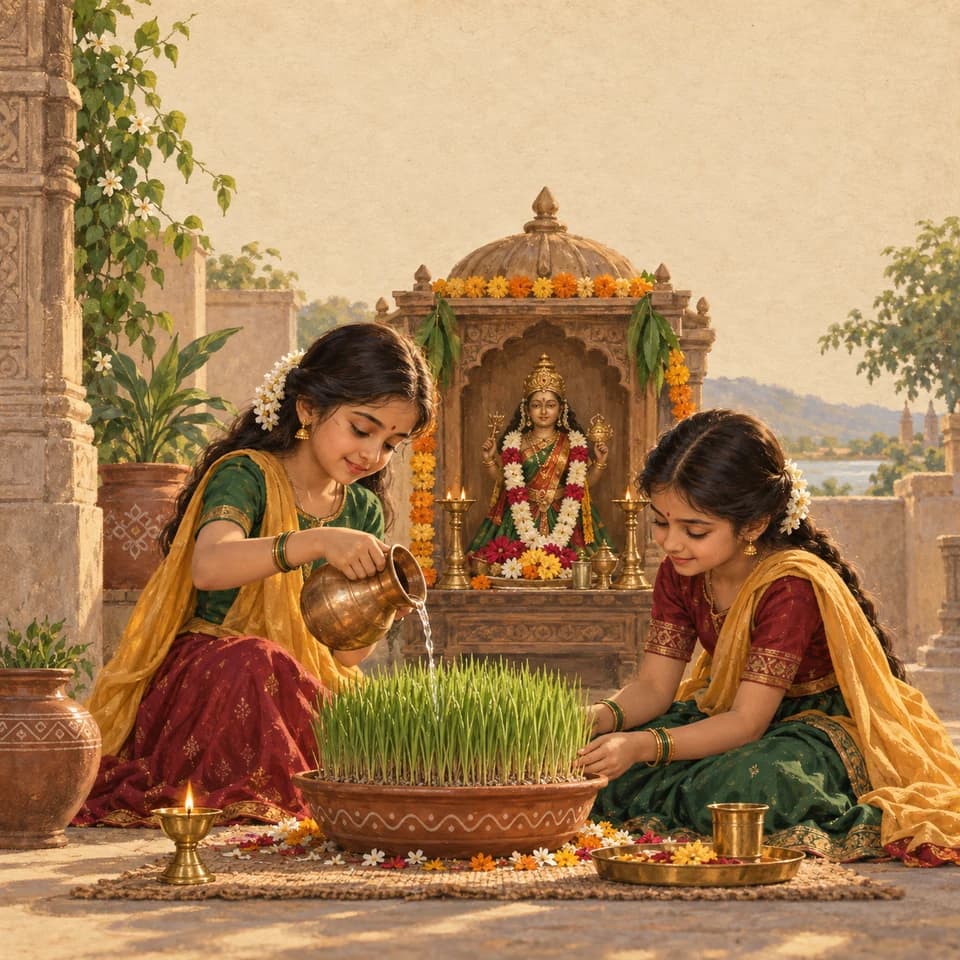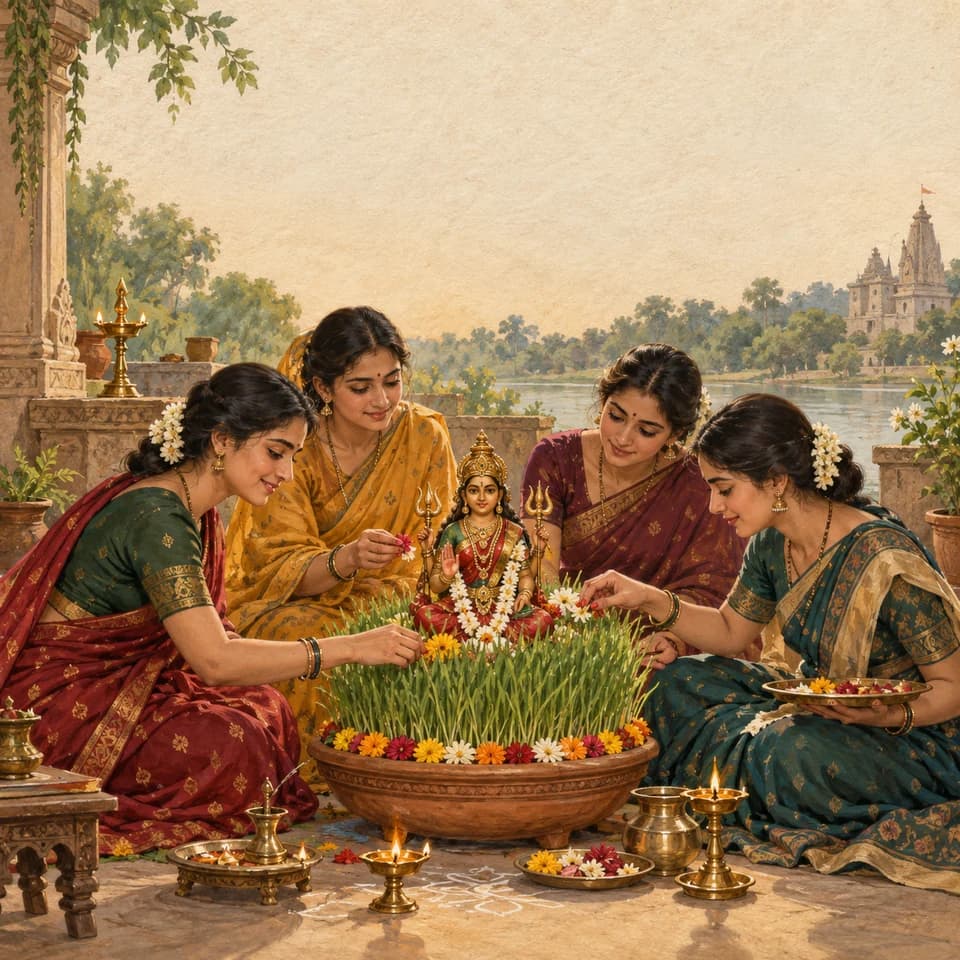
Devshayani Ekadashi as it was kept in 2020.
Next date: 14 July 2027Devshayani Ekadashi 2020
Wednesday, 1 July 2020, in Ahmedabad
EkadashiGujarati · Hindu
Ashadhi Ekadashi · Hari Shayani Ekadashi
Panchang on the day
1
Wednesday
Waxing Eleventh
until 17:29
Libra
- રRa
- તTa
- Sunrise
- 05:56
- Sunset
- 19:30
- Moonrise
- 15:44
- Nakshatra
- Vishakha
- until 02:34 next day
- Yoga
- Siddha
- until 11:17
- Karana
- Vanija
- until 06:39
- Rahu Kalam 12:43 to 14:25
- Yamaganda 07:38 to 09:20
Why this date
Ashadh Waxing Eleventh, taken at sunrise
Runs from 30 Jun 19:49 IST to 1 Jul 17:29 IST.
In short
Ashadha Shukla Ekadashi is known as Devshayani or Ashadhi Ekadashi. It marks the traditional beginning of Vishnu's Yoga Nidra and Chaturmas. A familiar vrat-katha told on this day concerns King Mandhata.
The story
There was once a king of the Solar dynasty named Mandhata. He stood by the truth and cared for his people as his own family. They lived happily in his kingdom. Then a time came when no rain fell for three years in a row. Grain stopped growing in the fields, and drought spread across the kingdom. Food became hard to find. Along with everyday life, sacrifices and other religious observances began to suffer.
The distressed people came to their king. They described their hardship and begged him to lead them out of the crisis. Mandhata was troubled by what he heard. He wondered whether he had made some mistake as king. He could remember no deliberate injustice. Even so, he accepted responsibility for relieving his people's suffering and decided to seek a solution.
With his companions, the king entered the forest. He travelled from one sage's hermitage to another, asking for guidance. At last he reached Angira's ashram. Seeing the sage, he dismounted and bowed. Angira asked after the king and his kingdom. Mandhata then explained how there had been no rain for three years and how his people were going hungry. He asked what could be done.
In this old account, Angira answers according to the caste beliefs attributed to that age. He says that a man of the Shudra caste is practising austerities in the kingdom, although, in his view, that right belongs to Brahmins. He blames the drought on that man's practice and tells the king to kill him.
Mandhata refused. He said, 'How can I kill an innocent person absorbed in spiritual practice? Please show me another way.' He wanted to ease his people's distress, but would not take an innocent life to do so. Angira then advised him to observe Ashadha Shukla Ekadashi. He said that worshipping Vishnu and keeping this vrat with his family and people would relieve the kingdom's crisis.
Mandhata bowed to the sage and returned to his kingdom. He told the people about the vrat. When Ekadashi came, the king, his family and people from the different castes observed it together. The story says that rain then returned. Crops grew again, the shortage of grain ended and the people found relief. Happiness returned to the kingdom.
Why it matters
Devshayani Ekadashi begins Chaturmas, a period devoted to worship, study, charity and self-discipline. Mandhata's care for his people and his refusal to kill an innocent person have a special place in its vrat-katha.
What people do
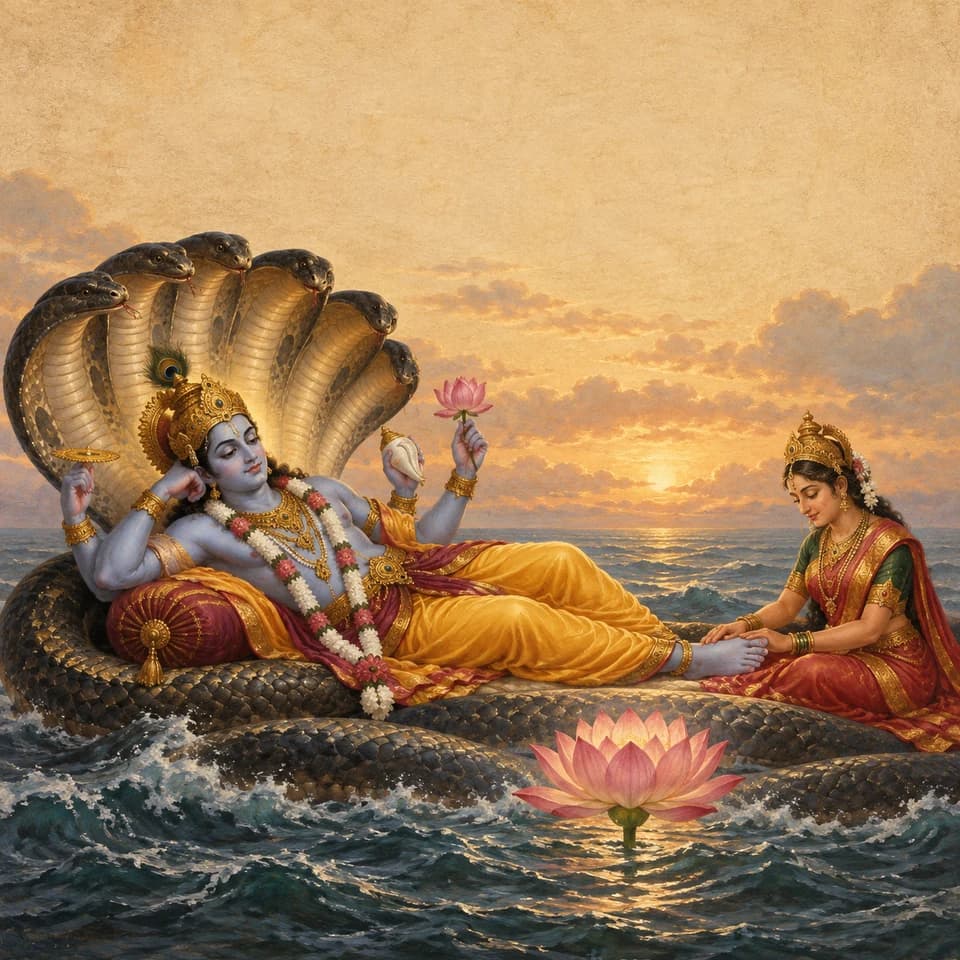
Devotees worship Vishnu, sing bhajans, read sacred texts and give in charity. Temples celebrate the Lord's retiring to rest. According to tradition, Vishnu enters Yoga Nidra upon Shesha in the Ocean of Milk and awakens on Kartika Shukla Ekadashi. The intervening period is known as Chaturmas.
Many devotees begin a daily reading, service or a discipline of their choice on this day. These observances differ by family and religious tradition.
Fasting
The Ekadashi vrat is kept according to health and family practices. Many avoid grains and pulses and take fruit-based fasting food. The fast ends on Dwadashi the following day, during the parana period given in the local panchang. Any Chaturmas discipline is chosen according to one's ability.
Told differently elsewhere
In Maharashtra, the day is widely known as Ashadhi Ekadashi. Warkari devotees and the palkhis carrying the padukas of Sant Dnyaneshwar and Sant Tukaram reach Pandharpur. Darshan of Vitthal and Rukmini, devotional singing and kirtan are central to the celebration.
In Gujarat and other regions, Vishnu worship and Chaturmas observances begin. Smarta and Vaishnava fasting dates can sometimes differ. The tithi is checked according to the local panchang and one's own tradition.
Questions people ask
- When is Devshayani Ekadashi in 2020?
- On Wednesday, 1 July 2020 in India. Runs from 30 Jun 19:49 IST to 1 Jul 17:29 IST.
- Why does the date change every year?
- It is kept by the lunar calendar, so its day on the civil calendar moves from year to year.
- Is the date the same everywhere?
- Usually. Where sunrise falls at a different moment the day can differ by one, and the dates here are worked out for India.
Dates in the coming years
- 2027Wednesday, 14 JulyAshadh Sud 11
- 2028Sunday, 2 JulyAshadh Sud 11
- 2029Saturday, 21 JulyAshadh Sud 11
- 2030Thursday, 11 JulyAshadh Sud 11
- 2031Tuesday, 1 JulyAshadh Sud 11
Last kept25 July 2026