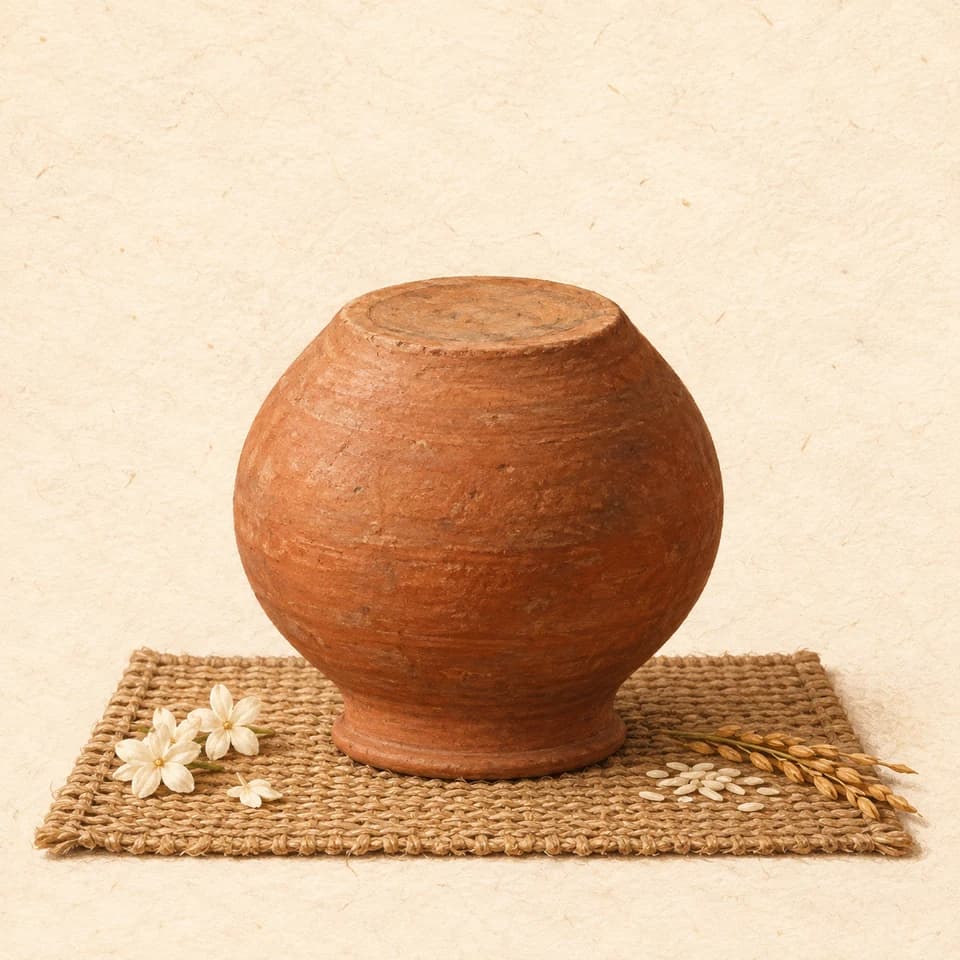
Ganga Dussehra as it was kept in 1995.
Next date: 13 June 2027Ganga Dussehra 1995
Thursday, 8 June 1995, in Ahmedabad
FestivalIndian · Hindu
Panchang on the day
8
Thursday
Waxing Tenth
until 01:29 next day
Virgo
- પPa
- ઠTha
- ણNa
- Sunrise
- 05:52
- Sunset
- 19:25
- Moonrise
- 14:23
- Nakshatra
- Hasta
- until 00:44 next day
- Yoga
- Vyatipata
- until 00:05 next day
- Karana
- Taitila
- until 14:20
- Rahu Kalam 14:20 to 16:01
- Yamaganda 05:52 to 07:33
- Abhijit muhurat 12:11 to 13:05
Why this date
Jeth Waxing Tenth, taken at sunrise
Runs from 8 Jun 03:01 IST to 9 Jun 01:29 IST.
In short
Ganga Dussehra is celebrated on Jyeshtha Shukla Dashami. Tradition remembers it as the day Ganga descended from heaven to earth. In the Valmiki Ramayana, Vishvamitra tells Rama how Bhagiratha's efforts brought the river down.
The story
King Sagara ruled Ayodhya. He had two queens, Keshini and Sumati, but no children. He went with them to practise austerities near the sage Bhrigu's hermitage. Pleased, Bhrigu offered a boon. One queen would have a son who would continue the dynasty, while the other would have sixty thousand sons. Keshini chose one son and Sumati chose the sixty thousand.
Keshini gave birth to Asamanjasa. From a gourd born to Sumati came sixty thousand children, who were raised in pots filled with ghee. Asamanjasa grew up cruel, throwing children into the Sarayu and causing suffering. Because of this behaviour, he was driven from the city. His son Anshuman was good-natured and treated everyone with respect.
Sagara once began an Ashvamedha sacrifice. The sacrificial horse was released under Anshuman's protection, but it was stolen. The sacrifice was now in danger of remaining unfinished. Sagara sent his sixty thousand sons to find the horse. Having undertaken the sacrificial vows, he could not leave the place himself.
The princes searched the earth without finding it. Then they began digging. Their excavation harmed many living beings, and the gods appealed to Brahma. When the princes returned, Sagara told them not to come back without the horse. They set out again and reached the regions beneath the earth. Along the way, they bowed to the great elephants supporting the directions and continued.
At last they saw the sage Kapila, with the horse grazing nearby. They assumed he had stolen it. In anger, they rushed at him with trees, stones and tools. Kapila uttered a powerful sound, and all Sagara's sons were reduced to ashes.
When his sons failed to return for a long time, Sagara sent Anshuman. Respectfully greeting the elders he met and asking for directions, Anshuman made his way to the ashes of his uncles. He was overcome with grief. The horse was nearby. Wanting to offer water to his dead relatives, he searched, but found none.
Garuda then appeared. Sumati was his sister. He explained that the waters of Ganga were needed to redeem the princes reduced to ashes by Kapila's power. When Ganga flowed over their ashes, they would attain heaven. Anshuman returned with the horse and told Sagara everything. The sacrifice was completed, but Sagara could find no way to bring Ganga down.
Anshuman became king after Sagara. Later he entrusted the kingdom to his son Dilipa and practised austerities to bring Ganga down, but his wish remained unfulfilled. Dilipa also worried about his ancestors' deliverance, yet could not complete the task in his lifetime. His son Bhagiratha then took responsibility for the kingdom.
Bhagiratha entrusted the administration to his ministers and went to Gokarna to practise austerities. After long and difficult efforts, Brahma was pleased and offered a boon. Bhagiratha asked that Ganga's waters might redeem his ancestors. He also asked for a child to continue his own lineage.
Brahma accepted his wishes but explained a difficulty. Earth could not bear the force of Ganga's descent from heaven. Shiva's help would be needed to receive her. Bhagiratha now turned to worshipping Shiva. After a year, Shiva was pleased and agreed to receive Ganga on his head.
Ganga descended with tremendous force, thinking that her current would sweep even Shiva down with her. Knowing her pride, Shiva held her within his matted hair. She moved within the locks but could find no way out. When she did not reach the earth, Bhagiratha again sought Shiva's favour.
When Shiva released Ganga, she divided into seven streams. Three flowed east and three west. The seventh followed Bhagiratha's chariot. Gods and sages came to witness the extraordinary descent. Bhagiratha led the way, and Ganga followed his course.
As she flowed onwards, Ganga flooded the place where the sage Jahnu was performing a sacrifice. Angered, he drank up the whole current. The gods and sages pleased him and asked him to accept Ganga as his daughter. Jahnu let her flow out again through his ears. She therefore also became known as Jahnavi. Once more, she followed Bhagiratha.
Ganga reached the ocean and then entered Patal Lok, where the ashes of Sagara's sons lay. Her sacred waters flowed over them. Brahma told Bhagiratha that his efforts had redeemed his sixty thousand ancestors and brought them to heaven. Ganga would be called Bhagirathi after him, and Tripathaga because she flowed through the three worlds.
Bhagiratha completed his ancestors' funeral rites with Ganga's water. The task left unfinished for generations was fulfilled. He returned to his capital and resumed caring for his people. They rejoiced to have him back.
Why it matters
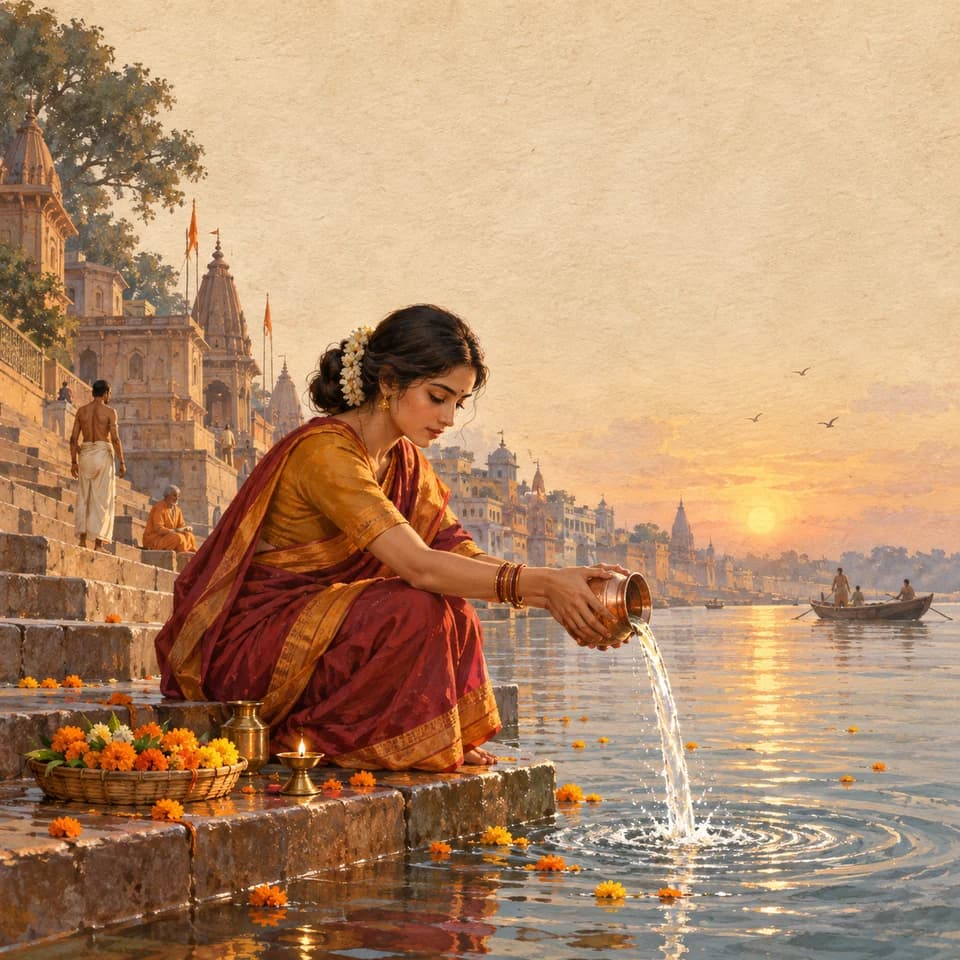
Ganga Dussehra remembers Ganga's descent to earth. Bhagiratha's story expresses sustained effort towards a task left unfinished for generations and care for one's ancestors. Respect for Ganga is also linked today with caring for the cleanliness of the river and its ghats.
What people do
Devotees bathe at the Ganga ghats, worship the river and offer prayers. Aarti and charitable giving are customary. Some offer water to their ancestors. Worship and gifts follow the family's own practices.
Told differently elsewhere
Devotees gather at ghats in places such as Haridwar, Prayagraj, Varanasi and Garh Mukteshwar. Families and temples in other regions also worship Ganga in their own way. This festival falls on Jyeshtha Shukla Dashami. Vijayadashami's Dussehra in Ashwin falls on a different tithi.
Questions people ask
- When is Ganga Dussehra in 1995?
- On Thursday, 8 June 1995 in India. Runs from 8 Jun 03:01 IST to 9 Jun 01:29 IST.
- Why does the date change every year?
- It is kept by the lunar calendar, so its day on the civil calendar moves from year to year.
- Is the date the same everywhere?
- Usually. Where sunrise falls at a different moment the day can differ by one, and the dates here are worked out for India.
Dates in the coming years
- 2027Sunday, 13 JuneJeth Sud 10
- 2028Friday, 2 JuneJeth Sud 10
- 2029Thursday, 21 JuneJeth Sud 10
- 2030Tuesday, 11 JuneJeth Sud 10
- 2031Saturday, 31 MayJeth Sud 10
Last kept24 June 2026