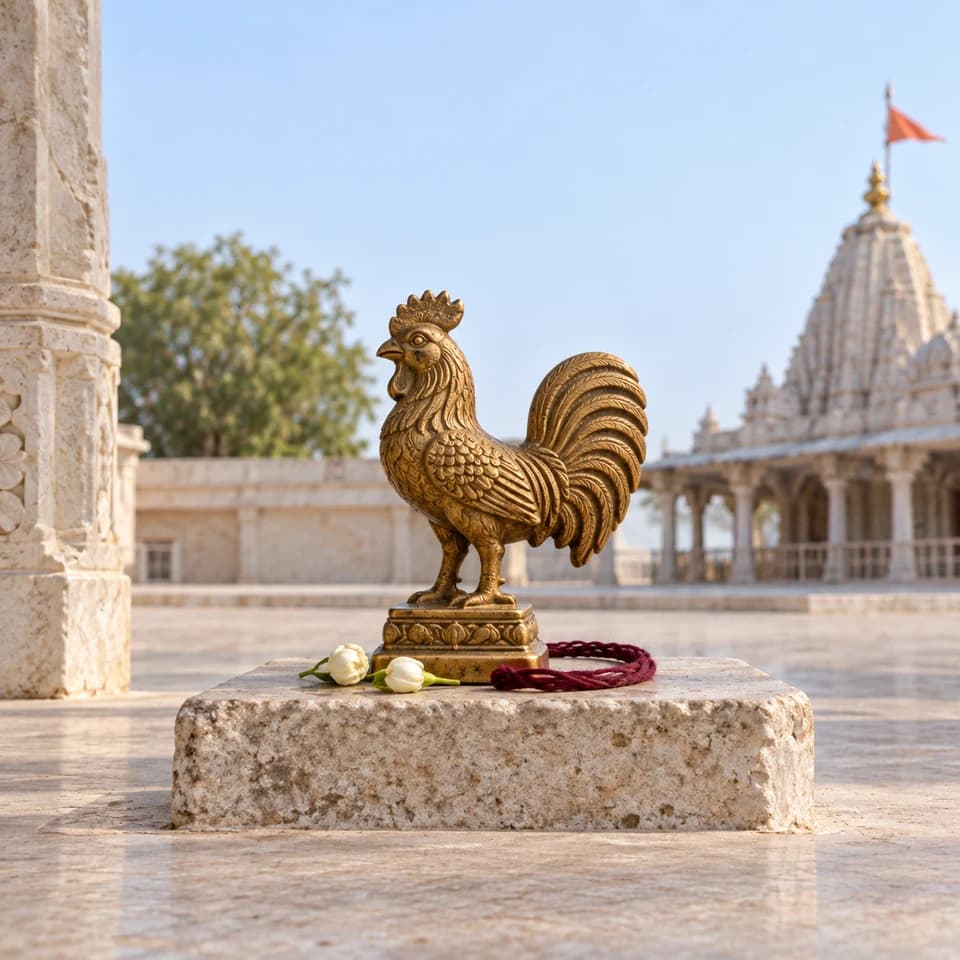
Hanuman Jayanti as it falls in 2028.
Next date: 20 April 2027Hanuman Jayanti 2028
Sunday, 9 April 2028, in Ahmedabad
Birth anniversaryIndian · Hindu
Panchang on the day
9
Sunday
Full Moon
until 15:56
Virgo
- પPa
- ઠTha
- ણNa
- Sunrise
- 06:23
- Sunset
- 18:59
- Moonrise
- 19:03
- Nakshatra
- Hasta
- until 11:52
- Yoga
- Vyaghata
- until 18:26
- Karana
- Bava
- until 15:56
- Rahu Kalam 17:24 to 18:59
- Yamaganda 12:41 to 14:15
- Abhijit muhurat 12:16 to 13:06
Why this date
Chaitra Full Moon, taken at sunrise
Runs from 8 Apr 19:11 IST to 9 Apr 15:56 IST.
In short
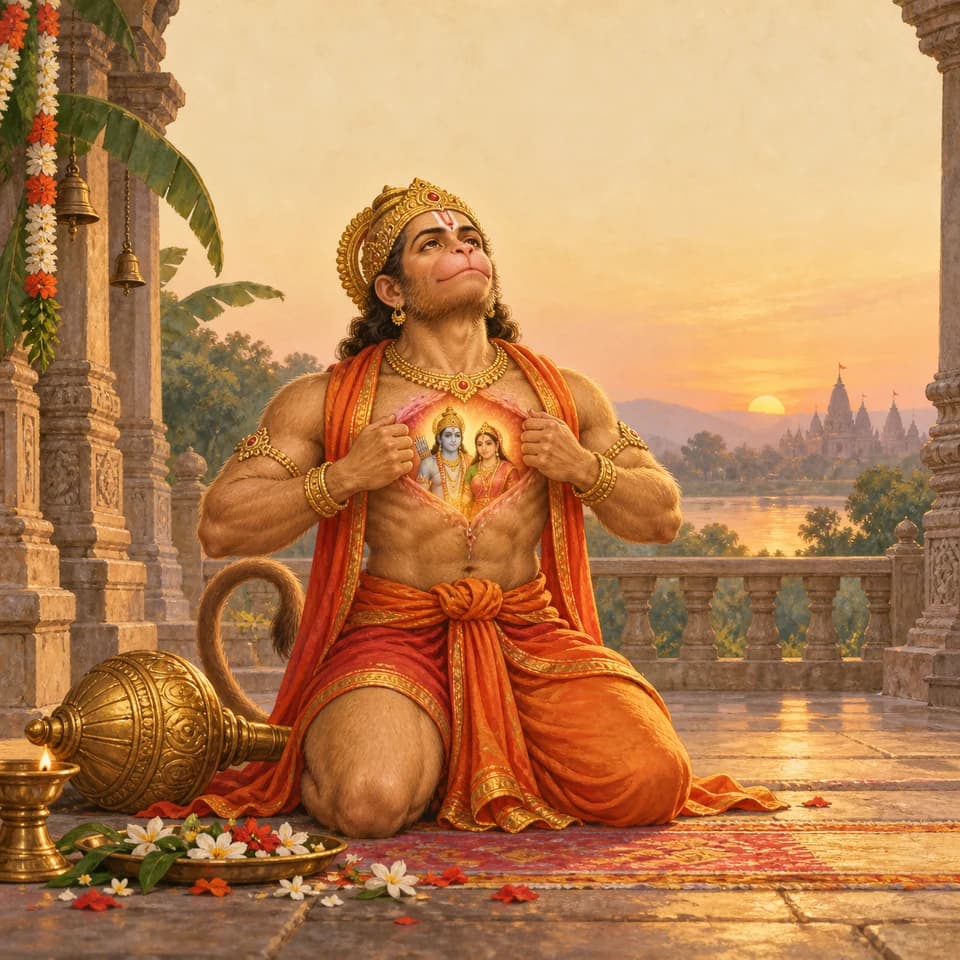
Hanuman Jayanti celebrates Hanuman’s birth, courage and love for Rama. Gujarat and much of northern India observe it on the full moon of Chaitra. This story follows the Ramayana’s account of his birth and childhood.
The story
Rama was speaking to the sage Agastya about Hanuman’s deeds. He had found Sita in Lanka, stood fearlessly among enemies and helped everyone during the war. Rama wanted to understand something: with such great strength, why had Hanuman once forgotten his own power? Agastya answered by telling him about Hanuman’s childhood.
Kesari and his wife Anjana lived on Mount Sumeru. Through the blessing of Vayu, the wind god, a child was born to them. He was lively and unusually strong. His divine connection with Vayu also gave him the name Pavanputra, son of the wind.
One morning Anjana went into the forest to gather fruit. The child was hungry and his mother was away. Just then the sun was rising. Seeing its red glow, he thought it was a large, delicious fruit. He leapt into the sky to eat it.
The gods watched in amazement as the child flew at such speed. He drew close to the sun. Vayu followed with a cool breeze to protect him from the heat. The sun god too saw that he was a little child who did not understand the danger, and did not burn him.
At the same time Rahu had come to cover the sun. When the child turned towards him, Rahu fled in alarm to Indra. He complained that someone else had reached the sun. Indra mounted his elephant Airavata and went there with Rahu.
As Rahu approached again, the child mistook him for another fruit and chased him. Rahu hurried back to Indra. Then the child noticed Airavata and rushed towards the great elephant to catch it. To stop him, Indra hurled his weapon, the vajra. It struck the child’s jaw. He fell onto a mountain and lost consciousness.
Vayu was deeply hurt to see his child injured. He carried him into a cave and stopped the wind from moving. Without air, people and animals struggled to breathe. The whole world, including the gods, was in danger.
Everyone went to Brahma. He explained that Vayu was grieving over the injured child. Brahma took the gods to the cave. Vayu held the child before him. Brahma touched him gently, and the child regained consciousness. Vayu was delighted to see his son well again. The wind began to move, and everyone could breathe.
Brahma told the gods that this child would one day do great things and asked them to bless him. Indra said that the vajra had struck his jaw, also called hanu, so he would be known as Hanuman. He blessed him with protection from any further harm by his vajra.
The sun god gave him a share of his radiance and promised to teach him the sacred texts when he was old enough. Varuna gave protection from water and his noose. Yama blessed him with protection from his staff, freedom from illness and courage in battle. Kubera gave protection from his mace. Shiva blessed him with safety from himself and his weapons. Vishvakarma gave protection from the divine weapons he had made. Brahma blessed him with a long life and said he would change his form as he wished, give courage to his friends and greatly help Rama. Vayu happily took the child back to Anjana.
As Hanuman grew, so did his mischief. At the sages’ ashrams he sometimes broke worship utensils or pulled apart clothing and other things. At first the sages patiently treated him as a child. Kesari and Vayu also tried to guide him, but he kept using his strength to play such pranks.
Finally the sages placed a curse on him: he would long forget the strength with which he troubled others. When someone reminded him of his deeds, he would remember that power again. Afterwards Hanuman visited the ashrams with a calmer manner. His strength had not disappeared; he had forgotten it himself.
As the sun god had promised, Hanuman learned the sacred texts and grammar from him. He became both strong and learned, able to speak with understanding. He had been a close friend of Sugriva since childhood. Later, while staying with Sugriva, he entered Rama’s service.
When the vanaras searching for Sita reached the shore, a vast sea lay before them. Everyone worried about who could reach Lanka. Jambavan reminded Hanuman of his birth, his childhood deeds and the blessings he had received. Remembering his strength, Hanuman rose with confidence. The child who had once leapt towards the sun because he was hungry was now ready to cross the sea to carry out Rama’s work.
Why it matters
Hanuman Jayanti honours courage, intelligence, humility and devoted service to Rama. This record observes Chaitra Purnima; dates vary across Indian regional traditions.
What people do
Devotees visit Hanuman temples, recite the Hanuman Chalisa, Sundarkand or prayers, and offer prasad according to family custom. They remember his helpfulness, courage and humility. Fasting and other observances follow family and temple traditions. Some regions, including parts of southern India, celebrate Hanuman’s birth on other dates.
Told differently elsewhere
Chaitra Purnima is common in Gujarat and much of North India; some South Indian communities follow Margashirsha, Vaishakha or other local reckonings. Do not assign every Hanuman birth observance this single date.
Questions people ask
- When is Hanuman Jayanti in 2028?
- On Sunday, 9 April 2028 in India. Runs from 8 Apr 19:11 IST to 9 Apr 15:56 IST.
- Why does the date change every year?
- It is kept by the lunar calendar, so its day on the civil calendar moves from year to year.
- Is the date the same everywhere?
- Yes. It is kept everywhere on the day it falls on in India.
Dates in the coming years
- 2027Tuesday, 20 AprilChaitra Poonam
- 2028Sunday, 9 AprilChaitra Poonam
- 2029Saturday, 28 AprilChaitra Poonam
- 2030Thursday, 18 AprilChaitra Poonam
- 2031Monday, 7 AprilChaitra Poonam
Last kept2 April 2026