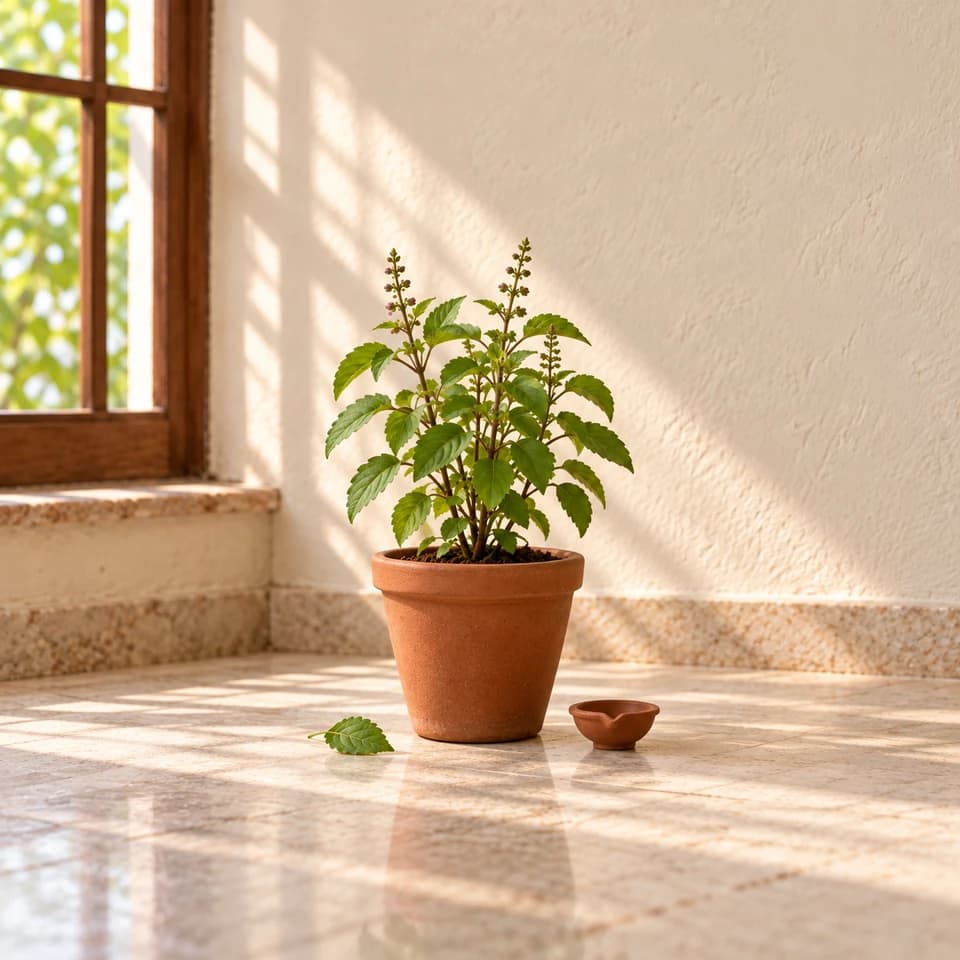
Kamika Ekadashi as it falls in 2029.
Next date: 29 July 2027Kamika Ekadashi 2029
Monday, 6 August 2029, in Ahmedabad
EkadashiGujarati · Hindu
Panchang on the day
6
Monday
Waning Eleventh
until 10:33
Taurus
- બBa
- વVa
- ઉU
- Sunrise
- 06:11
- Sunset
- 19:19
- Moonrise
- 02:20
- Nakshatra
- Mrigashira
- until 19:48
- Yoga
- Vyaghata
- until 13:43
- Karana
- Balava
- until 10:33
- Rahu Kalam 07:49 to 09:28
- Yamaganda 11:06 to 12:45
- Abhijit muhurat 12:19 to 13:11
Why this date
Ashadh Waning Eleventh, taken at sunrise
Runs from 5 Aug 09:34 IST to 6 Aug 10:33 IST.
In short
Kamika Ekadashi is a day of devotion to Vishnu. It falls in Ashadh Vad in the Gujarati calendar. The Padma Purana calls the same fortnight the waning fortnight of Shravan.
The story
Yudhishthira asked Shri Krishna, “What is the name of the Ekadashi that falls in this fortnight? Please tell us about it.”
Krishna said, “Narada once asked Brahma the same question. I’ll tell you what Brahma told him.”
Narada asked Brahma, “What is the Ekadashi in the waning fortnight of Shravan called? Whom should people worship on that day? How should they observe it, and what fruit does it bring?”
Brahma replied, “Narada, this Ekadashi is called Kamika. Listening to its story with faith is itself considered an act of devotion. The merit of hearing it is compared to that of performing a Vajapeya sacrifice.”
Brahma continued, “On this day people worship Vishnu, who carries the conch, the discus and the mace. Some call him Hari, others Shridhar, Madhava or Madhusudana. A devotee can honour him through worship or by keeping him in mind.”
Then Brahma told Narada about the holy places people travel to visit. He named the Ganga, Kashi, Naimisharanya and Pushkar. He spoke of bathing in the Godavari when Jupiter is in Leo, and of bathing in the Dandaka region at the special time called Vyatipata. Even the merit associated with these sacred places and times, he said, was surpassed by the worship of Krishna on Kamika.
Brahma gave Narada examples of gifts. “Observing Kamika is compared to giving away the earth with its forests and seas. It is also compared to giving a cow as she is about to calve, together with the things that go with the gift. When someone worships Shridhar in Shravan, the gods, the gandharvas and the nagas are honoured too.”
Brahma told Narada that everyone could worship Hari according to their means. He compared life to a vast ocean. People burdened by their own wrongdoing can feel as though they are sinking into mud. Brahma described Kamika as a way for them to find a foothold again. Hari himself, he said, had praised the observance for its power to cleanse wrongdoing. Brahma spoke of its reward as greater even than the fruit sought through the study of spiritual knowledge.
Then Brahma spoke of the night of Kamika. “A devotee who keeps the observance and stays awake remembering Hari need not face Yama in his terrible form,” he told Narada. “That person is spared a painful fate and an unhappy rebirth. Even yogis have found liberation through this observance.”
Next came the story of the tulsi leaf. “What happens when water falls on a lotus leaf?” Brahma asked. “The drop rolls away. It does not cling to the leaf. In the same way, wrongdoing does not cling to the person who worships Hari with tulsi leaves.”
A tulsi leaf is small, but Brahma compared its offering to a gift of gold and silver. A shrine can be dressed in pearls, coral and precious stones, he said, yet a tulsi leaf is dearer to Vishnu. He also spoke of offering the small flower clusters of the tulsi plant to Keshava.
Brahma bowed to tulsi in his praise. He spoke of the plant’s sight as easing the burden of wrongdoing and of its touch as purifying the body. In his praise he called it a plant that drives away illness. He said that even Yama fears the merit of a devotee who waters it. He described tulsi as planted by Krishna and placed at his feet. The offering, Brahma said, draws the devotee closer to Krishna and brings the hope of liberation.
After tulsi, Brahma spoke of the lamp. “When someone lights a lamp before Hari by day and night on Ekadashi, even Chitragupta cannot reckon the merit of that offering.”
Brahma said that when the lamp burns before Krishna, the ancestors of the person who lit it are satisfied with nectar in heaven. The person who offers a lamp lit with ghee or sesame oil, he continued, reaches the realm of the sun and is welcomed there with countless lights.
Finally Brahma told Narada, “This is the account of Kamika Ekadashi. The observance brings release from even grave wrongdoing and leads the devotee to Vishnu’s abode. A person who listens to this account with faith is also promised that fruit.”
That was the teaching Narada heard from Brahma and Krishna passed on to Yudhishthira.
Why it matters
The traditional teaching honours sincere Vishnu devotion, simple offerings and spiritual renewal, comparing its merit with pilgrimage and charity.
What people do
Devotees observe Kamika Ekadashi to remember Vishnu. Some worship at home and others visit a temple. People offer tulsi, light a diya and read or listen to the story. Some fast and break their fast on Dwadashi according to their local panchang. Customs vary by family and tradition.
Fasting
Fasting is voluntary and should suit one's health. Food rules vary by household and Smarta or Vaishnava tradition; waterless fasting is not required for everyone. Break the fast within the locally prescribed Dwadashi period.
Told differently elsewhere
Gujarati amanta Ashadha Krishna Ekadashi corresponds to Shravana Krishna Ekadashi in many northern purnimanta calendars. These month names can describe the same lunar day. Local fasting selection and parana may differ.
Questions people ask
- When is Kamika Ekadashi in 2029?
- On Monday, 6 August 2029 in India. Runs from 5 Aug 09:34 IST to 6 Aug 10:33 IST.
- Why does the date change every year?
- It is kept by the lunar calendar, so its day on the civil calendar moves from year to year.
- Is the date the same everywhere?
- Usually. Where sunrise falls at a different moment the day can differ by one, and the dates here are worked out for India.