Sonepur Mela as it was kept in 1972.
Next date: 24 November 2026Sonepur Mela 1972
Monday, 20 November 1972, in Ahmedabad
FairIndian · Hindu
Harihar Kshetra Mela
Panchang on the day
20
Monday
Waxing Fourteenth
until 08:29
Aries
- અA
- લLa
- ઈEe
- Sunrise
- 06:55
- Sunset
- 17:55
- Moonrise
- 17:13
- Nakshatra
- Bharani
- until 15:09
- Yoga
- Variyana
- until 13:09
- Karana
- Vanija
- until 08:29
- Rahu Kalam 08:17 to 09:40
- Yamaganda 11:02 to 12:25
- Abhijit muhurat 12:03 to 12:47
Why this date
Kartik Full Moon, taken at sunrise
Runs from 20 Nov 08:29 IST to 21 Nov 04:36 IST.
This tithi is skipped: it begins and ends between two sunrises, so no day carries it. Shown on the day it begins.
In short
Sonepur Mela is a historic fair in Bihar at the Ganga–Gandak confluence. It begins around Kartik Purnima with pilgrimage to Harihar Nath temple and continues with cultural programmes, crafts and lawful trade over subsequent weeks.
The story
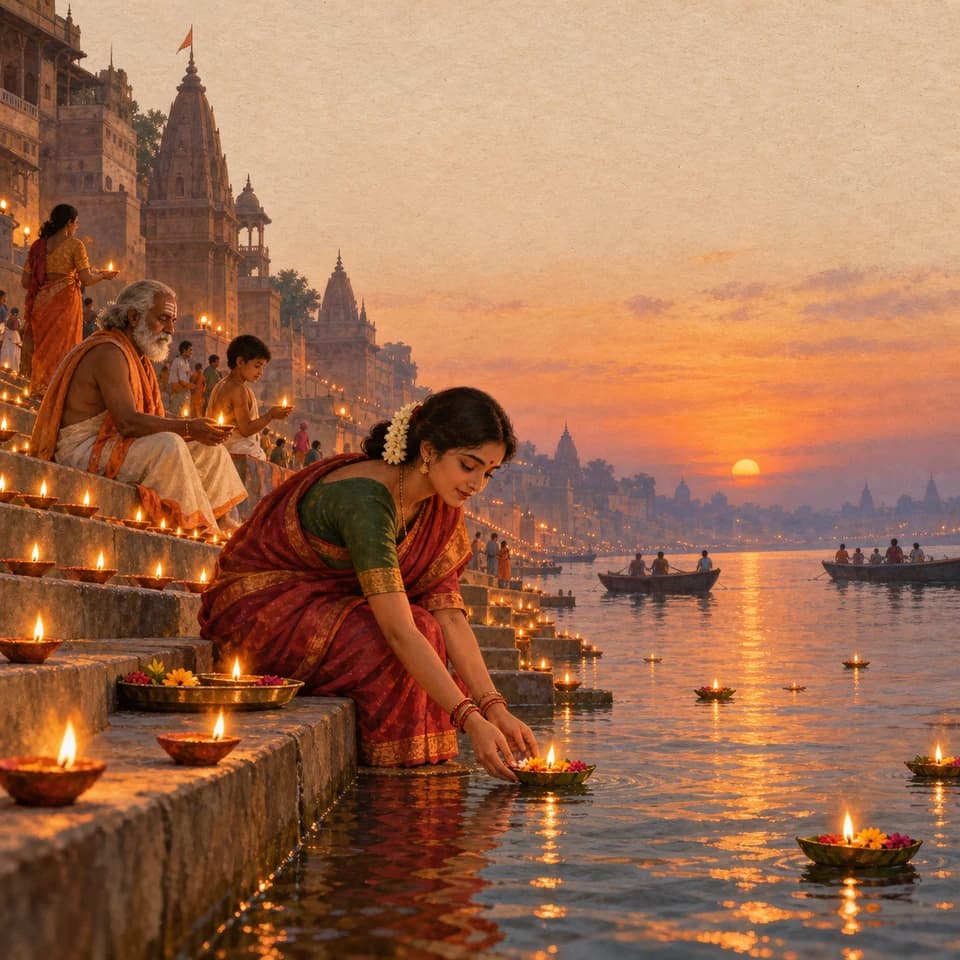
Sonepur Mela, also called Harihar Kshetra Mela, takes place at Sonepur in Bihar near the confluence of the Ganga and Gandak rivers. Its main religious opening is associated with Kartik Purnima, when pilgrims bathe at the sacred waters and visit the Harihar Nath temple. The name Harihar evokes Vishnu and Shiva together, while local sacred geography connects the place to the story of Gajendra Moksha, the elephant's rescue by Vishnu.
In the devotional story, an elephant is seized by a crocodile while bathing. Unable to free himself by strength, he appeals to Vishnu, who comes to save him. Different Puranic tellings give additional details about the elephant's previous life and the long struggle. The legend is a religious explanation of the site's importance, not a historical account of how the modern fair began. Pilgrims arrive for prayer and bathing, while the fair brings together traders, artisans, performers and visitors.
Sonepur was long famous for a large livestock market, including elephants in earlier times. Modern wildlife protection and animal-welfare laws place important restrictions on trade; descriptions should never imply that protected wildlife may be freely bought or sold. The fair can continue for weeks after Kartik Purnima, and its programme and duration are announced locally each year. The festival is therefore both a pilgrimage and a changing public fair, not a one-day cattle sale.
The fair's commercial character has changed as transport, agricultural markets and animal-welfare law have evolved. Its cultural life now includes regional performance, handicrafts and public exhibitions as well as religious pilgrimage. A calendar entry should identify Kartik Purnima as the traditional opening marker, while the official fair programme may extend for many days and is announced separately. Visitors should rely on current government guidance for trade restrictions and event schedules.
Why it matters
Historic Bihar fair linking Kartik Purnima pilgrimage, Harihar Nath devotion, rural commerce and changing animal-welfare regulation.
What people do
Pilgrims bathe at the Ganga–Gandak confluence and visit Harihar Nath temple; the fair offers crafts, entertainment and lawful trade.
Told differently elsewhere
Held at Sonepur in Bihar near Patna and Hajipur, opening around Kartik Purnima and continuing beyond it; exact fair duration changes annually.
Questions people ask
- When is Sonepur Mela in 1972?
- On Monday, 20 November 1972 in India. Runs from 20 Nov 08:29 IST to 21 Nov 04:36 IST.
- Why does the date change every year?
- It is kept by the lunar calendar, so its day on the civil calendar moves from year to year.
- Is the date the same everywhere?
- Yes. It is kept everywhere on the day it falls on in Patna.
Dates in the coming years
- 2026Tuesday, 24 NovemberKartik Poonamin 11 days
- 2027Sunday, 14 NovemberKartik Poonam
- 2028Thursday, 2 NovemberKartik Poonam
- 2029Wednesday, 21 NovemberKartik Poonam
- 2030Sunday, 10 NovemberKartik Poonam
Last kept5 November 2025