Vaisakhi / Baisakhi as it falls in 2030.
Next date: 14 April 2027Vaisakhi / Baisakhi 2030
Sunday, 14 April 2030, in Ahmedabad
FestivalIndian · Hindu
Panchang on the day
14
Sunday
Waxing Eleventh
until 20:02

Leo
- મMa
- ટTa
- Sunrise
- 06:19
- Sunset
- 19:01
- Moonrise
- 15:16
- Nakshatra
- Magha
- until 21:37
- Yoga
- Ganda
- until 20:51
- Karana
- Vanija
- until 08:44
- Rahu Kalam 17:25 to 19:01
- Yamaganda 12:40 to 14:15
- Abhijit muhurat 12:14 to 13:05
Why this date
The sun enters Aries, taken at midnight
The sun changes sign at 14 Apr 09:50 IST.
In short
Vaisakhi / Baisakhi is a festival observed according to the Hindu calendar. Its date and customary practices can vary by region and local Panchang.
The story
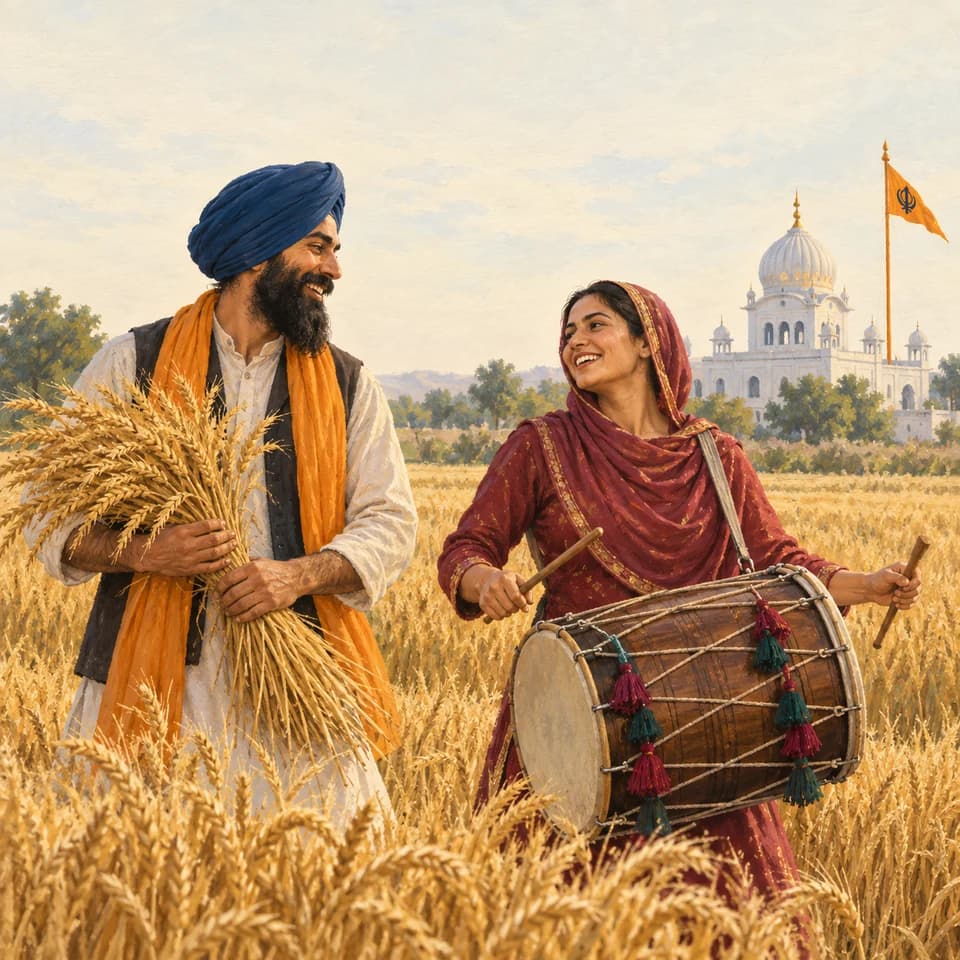
Vaisakhi is both a spring harvest celebration in Punjab and one of the defining anniversaries of Sikh history. As wheat ripens, farming families express gratitude for their labour and the season through fairs, shared meals, music and traditional dancing. The wider solar new-year period is marked differently across South Asia. For Sikhs the day has a distinct historical turning point: the gathering convened by Guru Gobind Singh at Anandpur Sahib in 1699.
In Sikh accounts the Guru called for someone willing to give his head in devotion. Five volunteers stepped forward one by one and were later presented to the congregation as the Panj Pyare, the Five Beloved Ones. The Guru prepared Amrit and initiated them, establishing the Khalsa as a disciplined community committed to ethical courage, service and spiritual equality. Sikh tradition also recounts that the Guru received initiation from the Five, affirming the importance of the community itself. The ceremony challenged inherited status distinctions and joined devotion with responsibility and readiness to defend the oppressed.
Gurdwaras hold kirtan, scripture readings, Nagar Kirtan processions, seva and langar open to all. Punjab's agricultural festivities include bhangra, gidda and community fairs, but these cultural practices should not replace the specifically Sikh account of 1699. Civil dates and solar ingress conventions need comparison with contemporary Sikh calendars and official local observances.
Why it matters
Vaisakhi combines the Punjab harvest season with the Sikh commemoration of the Khalsa founded by Guru Gobind Singh at Anandpur Sahib in 1699. These are related but distinguishable histories.
What people do
Bhangra and gidda in the fields and at the melas, and the wheat cut. Gurdwaras hold nagar kirtan and the Nishan Sahib's cloth is changed. Farmers thank the year at the granth and then at the threshing floor, which is the order it happens in.
Told differently elsewhere
Punjab and Haryana, and every Sikh congregation abroad, where the Nagar Kirtan procession is the year's largest. The same solar entry is Pohela Boishakh in Bengal, Bohag Bihu in Assam, Puthandu in Tamil Nadu, Vishu in Kerala and Maha Vishuva Sankranti in Odisha.
Questions people ask
- When is Vaisakhi / Baisakhi in 2030?
- On Sunday, 14 April 2030 in India. The sun changes sign at 14 Apr 09:50 IST.
- Why does the date change every year?
- It is kept when the sun enters a sign, so its date moves by a day at most.
- Is the date the same everywhere?
- Yes. It is kept everywhere on the day it falls on in Amritsar.
Dates in the coming years
- 2027Wednesday, 14 AprilChaitra Sud 8
- 2028Thursday, 13 AprilChaitra Vad 4
- 2029Saturday, 14 AprilChaitra Sud 1
- 2030Sunday, 14 AprilChaitra Sud 11
- 2031Monday, 14 AprilChaitra Vad 7
Last kept14 April 2026