Chaitra Navratri as it was kept in 1976.
Next date: 7 April 2027Chaitra Navratri 1976
Wednesday, 31 March 1976, in Ahmedabad
FestivalGujarati · Hindu
Panchang on the day
31
Wednesday
Waxing First
until 01:15 next day

Pisces
- દDa
- ચCha
- ઝJha
- થTha
- Sunrise
- 06:32
- Sunset
- 18:56
- Moonrise
- 06:40
- Nakshatra
- Revati
- until 01:53 next day
- Yoga
- Indra
- until 23:54
- Karana
- Kimstughna
- until 11:56
- Rahu Kalam 12:44 to 14:17
- Yamaganda 08:05 to 09:38
Why this date
Chaitra Waxing First, taken at sunrise
Runs from 30 Mar 22:38 IST to 1 Apr 01:15 IST.
In short
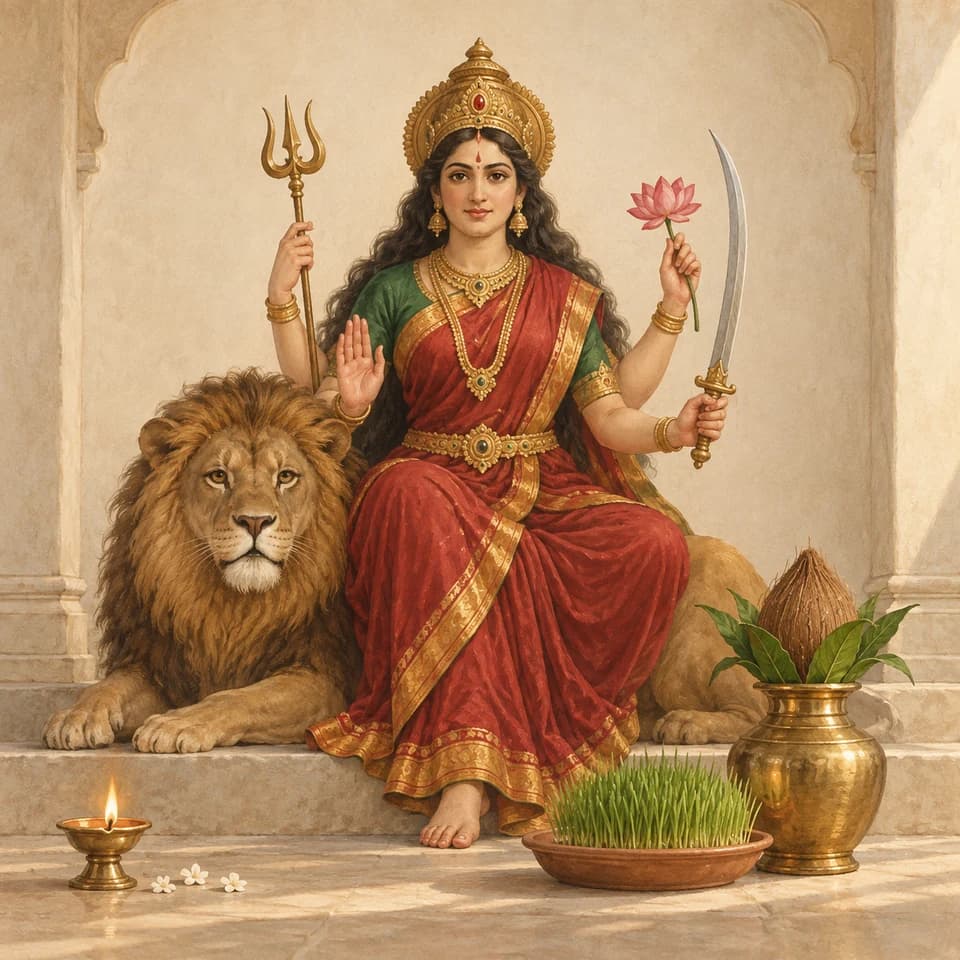
During Chaitra Navratri, which begins on Chaitra Shukla Pratipada, devotees worship the Divine Mother for nine days. As it falls in spring, it is also called Vasanta Navratri. Among the Devi Mahatmya stories remembered during this period is that of King Suratha and the merchant Samadhi. This is the account of how these two men, after losing everything, came to seek the Mother’s refuge.
The story
The sage Markandeya was telling the story of the origin of Savarni Manu. Long ago, in the time of Svarochisha Manu, a king named Suratha belonged to the Chaitra dynasty. He cared for his subjects as though they were his own children. Although he had a large army, he was once defeated in a war against enemy kings. Their forces were smaller, but Suratha could not overcome them.
After his defeat, Suratha returned to his capital. He still ruled his own territory, but powerful enemies continued to press him. His own dishonest ministers took advantage of his weakness. Even in his capital, they took control of his treasury and army. Suratha lost his authority.
One day, using a hunting trip as an excuse, Suratha rode out alone and entered a dense forest. There he found the hermitage of the sage Medhas. Students lived there, and even wild animals moved about peacefully. The sage welcomed him respectfully, and Suratha stayed there for some time.
The hermitage was peaceful, but Suratha's mind could not leave his kingdom behind. What was happening in the city that he and his ancestors had cared for? Were his dishonest servants treating the people fairly? His brave chief elephant was now in enemy hands; how was it being looked after?
He also remembered his followers. Those who had once depended on his favour, wealth and food might now be serving other kings. He worried that careless spenders would waste the treasury he had built up with so much effort. The kingdom was no longer his, yet his thoughts kept returning to it.
Once, near the hermitage, Suratha met a merchant whose face looked troubled. The king kindly asked who he was, why he had come to the forest and why he seemed so unhappy. The merchant bowed respectfully and introduced himself as Samadhi.
Samadhi had been born into a wealthy family. He said that, out of greed for his money, his wife and sons had driven him out of his home. Trusted relatives had abandoned him too. Separated from his wealth and family, he had come to the forest in sorrow.
Yet those same people still occupied his thoughts. Were his wife and children well, or were they facing some difficulty? Were his sons living honestly or behaving badly? Being far away, he had no news. His concern for his family would not stop.
Suratha was surprised. Why, he asked, was Samadhi still lovingly attached to the wife and sons who had cast him aside for his wealth? Samadhi replied that the king was right. He understood this himself, yet he could not harden his heart.
Samadhi said that they had given up their affection for a father, husband and relative, but his own heart still went towards them. Seeing their faults had not lessened his love. Remembering them brought sighs and sorrow. He knew what had happened, but could not understand why he still felt this way.
Suratha and Samadhi then went together to Medhas. They bowed respectfully and sat near him. Suratha explained his question: he knew he had lost his kingdom, yet his sense of belonging to everything in it would not go away. This worry kept his mind from settling and caused him pain.
He also described Samadhi's situation. His wife, children, servants and relatives had abandoned him, but he remained bound by affection for them. Both men could see the faults in their situation, yet felt drawn back to it. Why did this attachment cloud their judgement even when they understood what was wrong?
Medhas explained that every living being has some ability to know the world through its senses. Some creatures cannot see by day, some cannot see at night, and some can see at both times. Humans have understanding, but it is not theirs alone; animals and birds also know things in their own way.
The sage gave the example of birds. Even when hungry themselves, they put grains into their chicks' beaks. Humans also love their children and often hope for help or something in return in the future. Despite having understanding, living beings are pulled into the whirlpool of attachment.
The sage said that this was the power of Mahamaya, who sustains worldly life. She is also Vishnu's divine sleep, and the world falls under her spell. Her influence can draw even the minds of the wise. Suratha and Samadhi therefore need not be surprised at their own condition.
The whole world arises through that same Goddess. When pleased, she also grants liberation. The sage described her as the knowledge that leads to freedom: the power connected with worldly bondage and the power that releases one from it are both the Divine Mother.
Suratha asked who this Goddess called Mahamaya was. What was her form? What was the extent of her power? How did she appear, and what did she do? The king wanted to hear all of this in detail.
Medhas said that the Goddess is eternal and pervades the entire world. When she appears to carry out the gods' work, people speak of her birth. He then narrated her appearances and mighty deeds. The accounts of Madhu and Kaitabha, Mahishasura, and Shumbha and Nishumbha occur within this part of the Devi Mahatmya.
After completing his account of the Mother's greatness, the sage told Suratha that the same Goddess who upholds the world also grants knowledge. Suratha, Samadhi and other people with understanding could still be deluded by her power. He advised them to seek her refuge. Through worship, she grants worldly well-being, heaven and liberation.
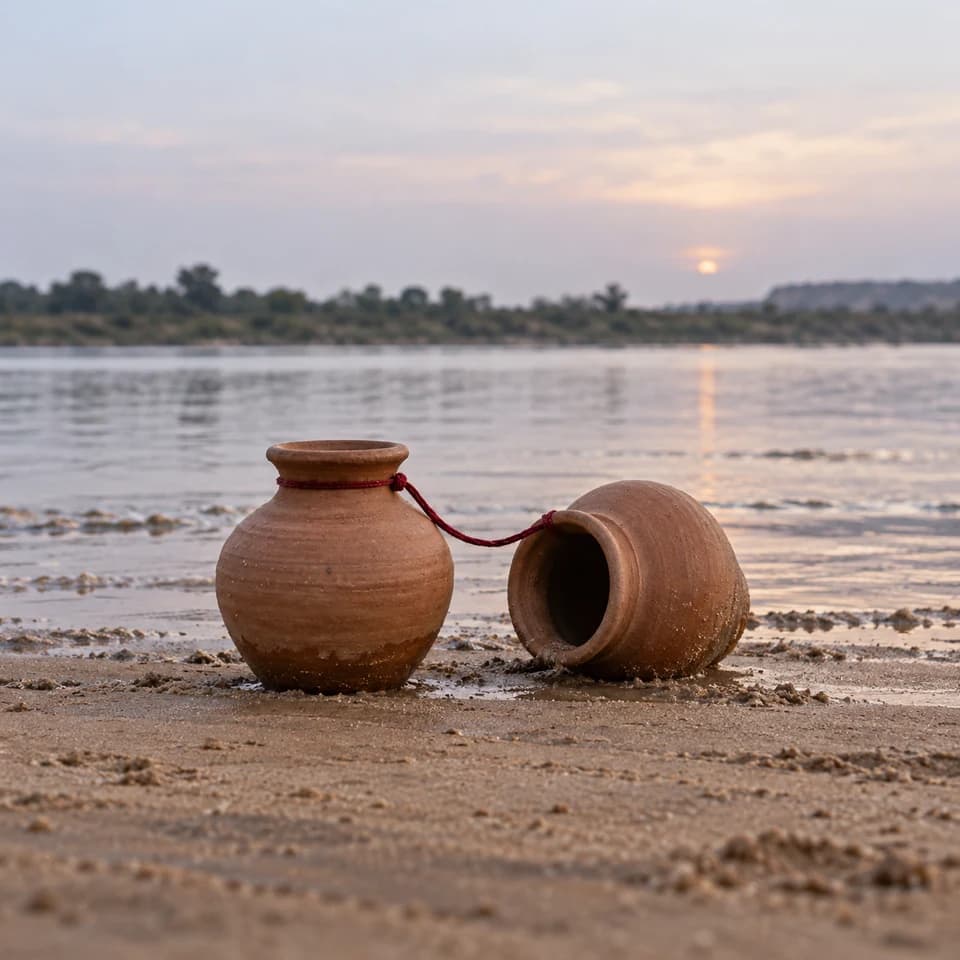
Suratha was weary from losing his kingdom and from the possessiveness that filled his mind. He bowed to the sage and left to practise austerities. Samadhi went with him, wishing to see the Mother. They stayed on a sandy riverbank and made an image of the Goddess from clay.
They recited the Devi Sukta and worshipped the Mother with flowers, incense, fire and water offerings. Through fasting and restraint, they kept their minds on her. The ancient account also mentions an offering of their own blood during their austerities.
Three years passed in this concentrated worship. Chandika, the Mother who cares for the world, was pleased and appeared before them. She asked them to express their wishes: she was pleased to grant what they had come to seek.
Suratha asked to recover his kingdom in this life. He wanted his enemies' power to end so that he could regain his rule. He also asked for an enduring kingdom in his next birth.
Samadhi wanted something different. His mind had turned away from worldly desires. He asked for knowledge that would break the attachment arising from the feelings of “I” and “mine”.
The Mother told Suratha that he would regain his kingdom within a few days. After defeating his enemies, his rule there would remain secure. When this life ended, he would be born again as a son of the sun god Vivasvan and become the Manu named Savarni.
The Mother then told Samadhi that his requested boon was granted too. He would receive knowledge leading to fulfilment. Both men received the blessings they had sought. As Suratha and Samadhi praised her with devotion, the Mother disappeared.
Markandeya concluded by saying again that Suratha, blessed by the Goddess, would be born to the sun god and become Savarni Manu.
Why it matters
Suratha and Samadhi’s story describes a familiar human experience: the mind does not easily let go even of things or relationships that have caused pain. They do not hide their questions; they seek understanding from a sage and worship the Mother. One wants his kingdom back, while the other seeks knowledge that frees him from possessiveness. Devotion to the Mother makes room for both the wish for well-being in life and the wish for liberation.
What people do
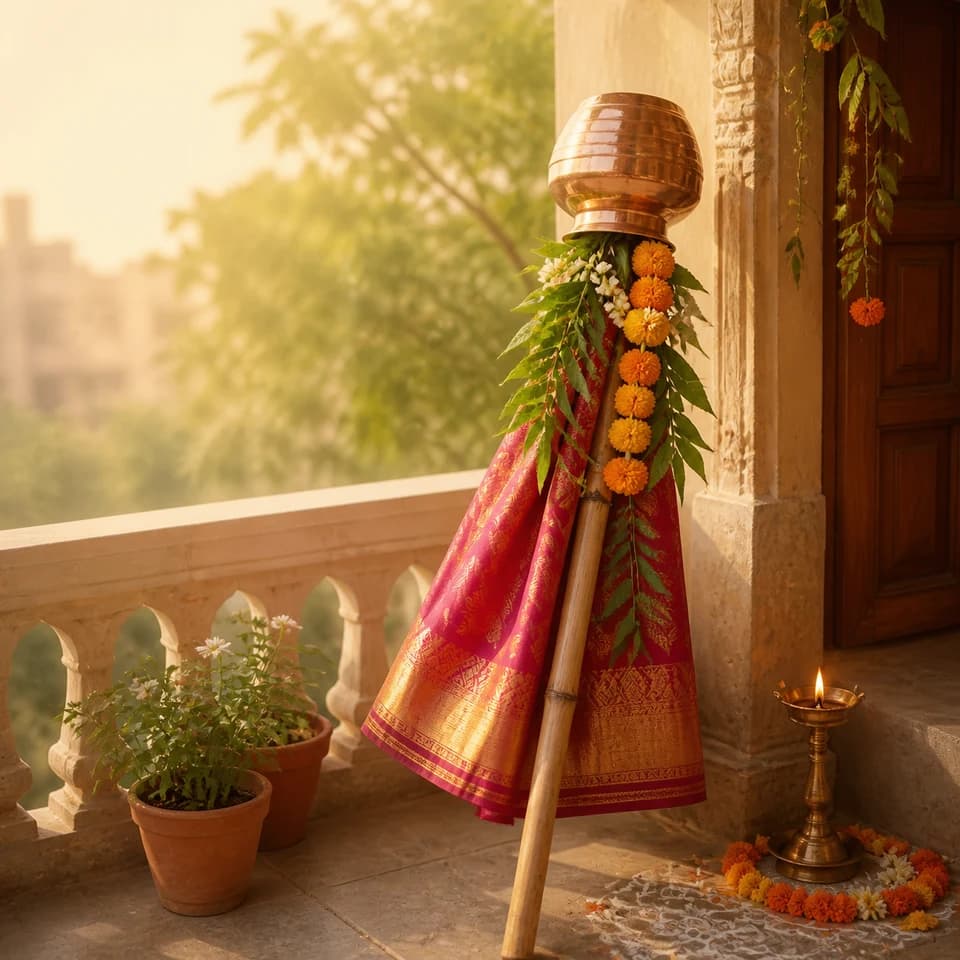
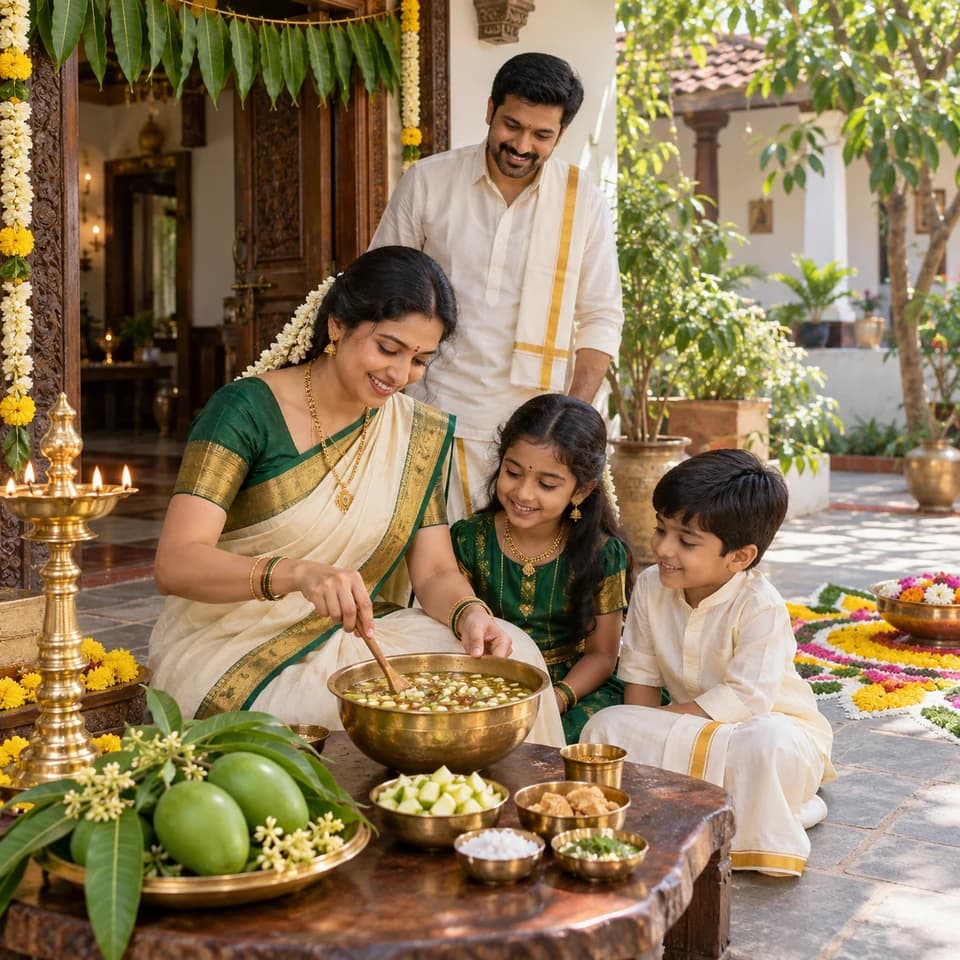
On the first day, families perform Ghatasthapana or kalash worship according to their tradition and local auspicious time. Devotees offer daily worship, lamps, aarti, chanting and recitation of the Durga Saptashati. Some homes sow barley. Many remember the forms of Navadurga and fast according to their health and ability.
Many families worship young girls and serve them a meal on Ashtami or Navami. Temples hold special worship, fire offerings and devotional singing. As Ram Navami also falls in this period, some traditions celebrate Rama’s birth. Families follow their own and their temple’s customs for the worship and programme.
Told differently elsewhere
Chaitra Navratri is specially celebrated at Mata Vaishno Devi’s shrine in Katra, Jammu and Kashmir. Devotees come for darshan, and worship and programmes such as Shat Chandi Yajna take place. Many other Goddess temples in northern India also have devotional celebrations during these spring days.
In southern India, the name Vasanta Navratri is also used. At the Sri Kodandaramaswami temple in Sringeri, Karnataka, this period is celebrated with special Rama Navratri and Sri Ram Navami worship. In some regions, a local new year begins on Chaitra Shukla Pratipada too. Worship of the Mother, Ram Navami and new-year celebrations each follow their own traditions.
Questions people ask
- When is Chaitra Navratri in 1976?
- On Wednesday, 31 March 1976 in India. Runs from 30 Mar 22:38 IST to 1 Apr 01:15 IST.
- Why does the date change every year?
- It is kept by the lunar calendar, so its day on the civil calendar moves from year to year.
- Is the date the same everywhere?
- Yes. It is kept everywhere on the day it falls on in India.
Dates in the coming years
- 2027Wednesday, 7 AprilChaitra Sud 1
- 2028Monday, 27 MarchChaitra Sud 1
- 2029Saturday, 14 AprilChaitra Sud 1
- 2030Wednesday, 3 AprilChaitra Sud 1
- 2031Monday, 24 MarchChaitra Sud 1
Last kept19 March 2026