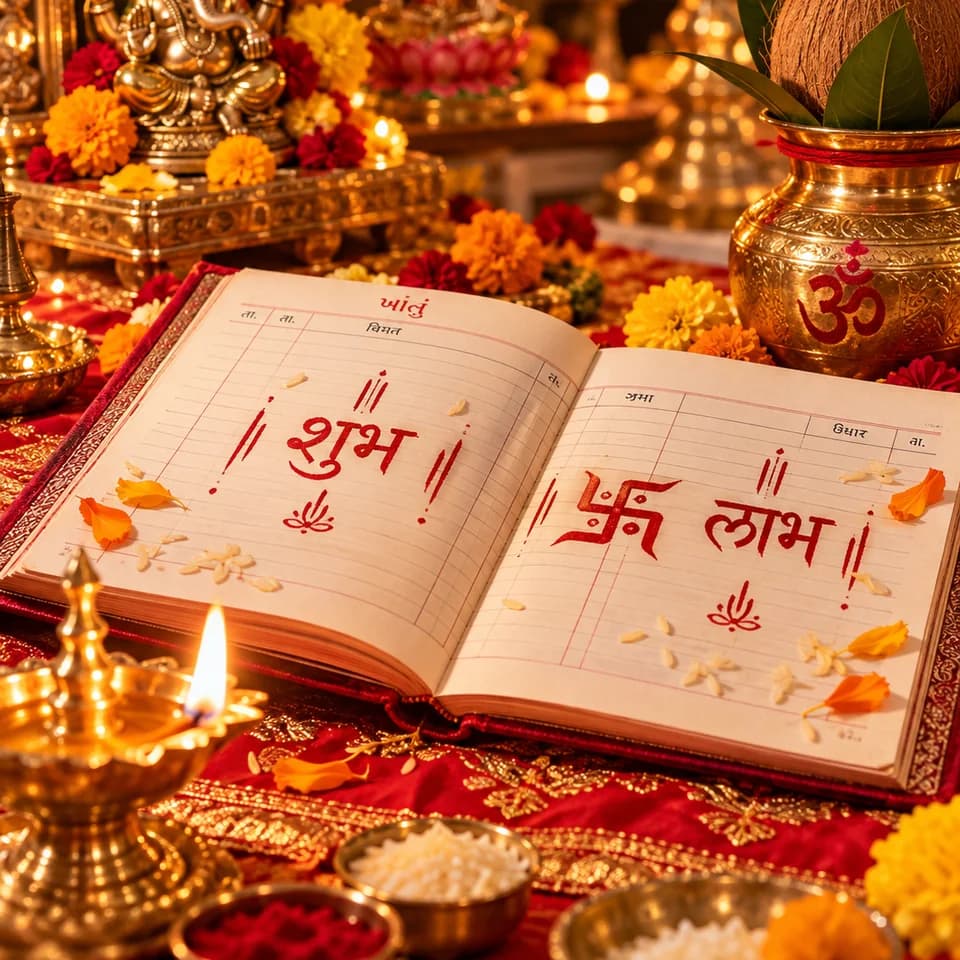
Dhanteras as it falls in 2031.
Next date: 27 October 2027Dhanteras 2031
Wednesday, 12 November 2031, in Ahmedabad
FestivalGujarati · Hindu
Panchang on the day
12
Wednesday
Waning Thirteenth
until 05:36 next day
Virgo
- પPa
- ઠTha
- ણNa
Puja time
17:57 to 20:21
At dusk, IST
- Sunrise
- 06:49
- Sunset
- 17:57
- Moonrise
- 04:10
- Nakshatra
- Hasta
- until 13:51
- Yoga
- Priti
- until 03:03 next day
- Karana
- Gara
- until 17:58
- Rahu Kalam 12:23 to 13:47
- Yamaganda 08:13 to 09:36
Why this date
Aso Waning Thirteenth, taken at dusk
Runs from 12 Nov 06:10 IST to 13 Nov 05:36 IST.
In short
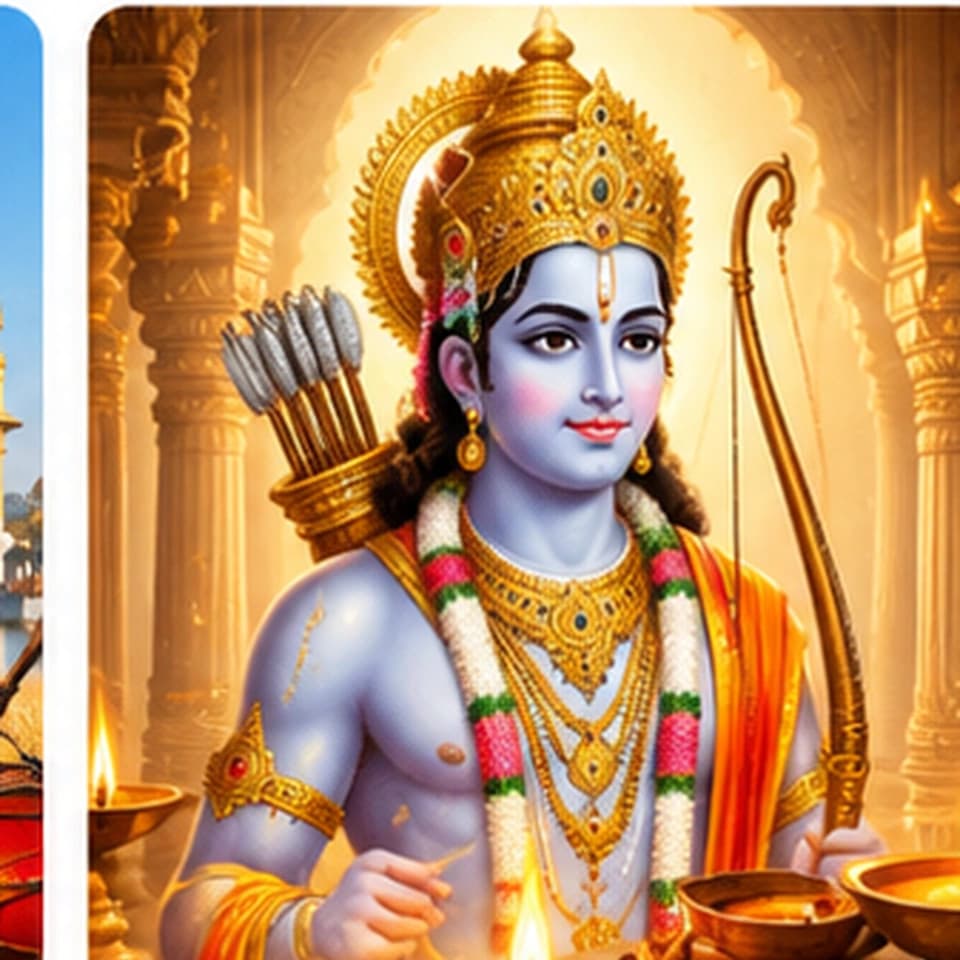
In the Gujarati calendar, Dhanteras or Dhantrayodashi falls on Aso Vad Teras, the thirteenth day of the dark fortnight. It begins the main Diwali celebrations in many families. Worship of Dhanvantari, prayers for health and prosperity, and lighting lamps are associated with the day. This is the Bhagavata’s story of the churning of the ocean and Dhanvantari’s appearance.
The story
At one time the gods had lost strength and prosperity. They were growing weaker against the asuras. Unable to overcome the trouble by themselves, they went to Brahma. He took them to Vishnu, where they prayed and asked for help.
Vishnu showed them a way. Churning the Ocean of Milk would bring forth amrita, the nectar of immortality. The gods could not do this alone, so they needed to make peace with the asuras for the time being and seek their help. Vishnu told them to use Mount Mandara as the churning rod and the serpent Vasuki as the rope. He assured them that he would help with this difficult task.
The gods approached Bali, the king of the asuras. Both sides agreed to work together to obtain the nectar. They began carrying Mount Mandara to the sea, but it was very heavy. Gods and asuras grew exhausted on the way. The mountain slipped from their hands, injuring many beneath it. Vishnu restored them to health and brought the mountain to the sea with Garuda’s help.
Herbs and plants were placed in the ocean. Vasuki was wound around Mandara. At first the gods held the serpent’s head, but the asuras said they would not stand at the tail. Rather than prolong the argument, Vishnu placed the gods at the tail and let the asuras take the head. Both sides began to churn.
But the mountain had no support beneath it. As they churned, Mandara began to sink. Gods and asuras were dismayed that the work had stopped despite all their preparation. Vishnu then took Kurma’s form, a great tortoise. He went beneath the water and supported the mountain on his back. Mandara became steady, and the churning could continue.
Gods and asuras pulled Vasuki in turns. The smoke and heat coming from the serpent’s mouth troubled the asuras. The gods too grew tired. Through Vishnu’s grace rain and a cool breeze came. Still, after long effort, there was no sign of nectar. Vishnu himself also helped with the churning.
Then the terrible poison Halahala emerged. Its effect began spreading everywhere. Those who had come hoping for nectar now feared for their lives. The gods and other beings sought Shiva’s protection and begged him to save the world from the poison.
Shiva spoke to Parvati. He said it was necessary to protect the beings in danger. With her consent, he gathered the poison in his hand and drank it. Its effect turned his throat blue, giving him the name Nilakantha, the blue-throated one. With the danger of poison removed, the churning began again.
Now divine beings and treasures began to appear one after another. Kamadhenu appeared, and the sages received her for their fire rituals. The horse Uchchaihshravas, the elephant Airavata, the Kaustubha jewel, the Parijata tree and the apsaras emerged. Gods and asuras watched to see what the ocean would bring forth next.
Then Lakshmi appeared. Her arrival filled everyone with joy. The gods prepared her ceremonial bathing. Sacred water, clothes, ornaments and flower garlands were offered. The gandharvas sang, and the gods praised her.
Lakshmi looked around. In one there was spiritual discipline but no control over anger; in another there was knowledge but attachment remained. She chose steady and impartial Vishnu as her husband. Placing a flower garland around him, she stood beside him. Vishnu gave her a place in his heart. Afterwards Varuni appeared, and the asuras received her.
The churning continued. At last a divine figure rose from the ocean, dressed in yellow and holding a vessel full of nectar. This was Dhanvantari, a divine form of Vishnu with knowledge of Ayurveda. After the long effort, the nectar everyone had awaited was now before them.
Seeing the vessel, the asuras rushed to seize it. They snatched it from Dhanvantari’s hands. The gods again turned to Vishnu in disappointment. He asked them to be patient and assured them he would find a way.
The asuras began arguing over who would drink first. Vishnu then appeared before them as Mohini. They were captivated by her and entrusted her with distributing the nectar, promising to accept her way of doing it.
Mohini seated the gods and asuras in separate rows. She kept talking to the asuras while giving the nectar to the gods. Rahu disguised himself as a god, joined their row and began to drink. The sun and moon recognized him and told Vishnu. Vishnu severed his head with the discus. The story says that his head survived because the nectar had already reached his throat.
At last the gods received the nectar and regained their strength. Vishnu left Mohini’s appearance and revealed his own form. The churning had repeatedly faced obstacles, but Dhanvantari had appeared and the task of obtaining the nectar was complete.
Why it matters
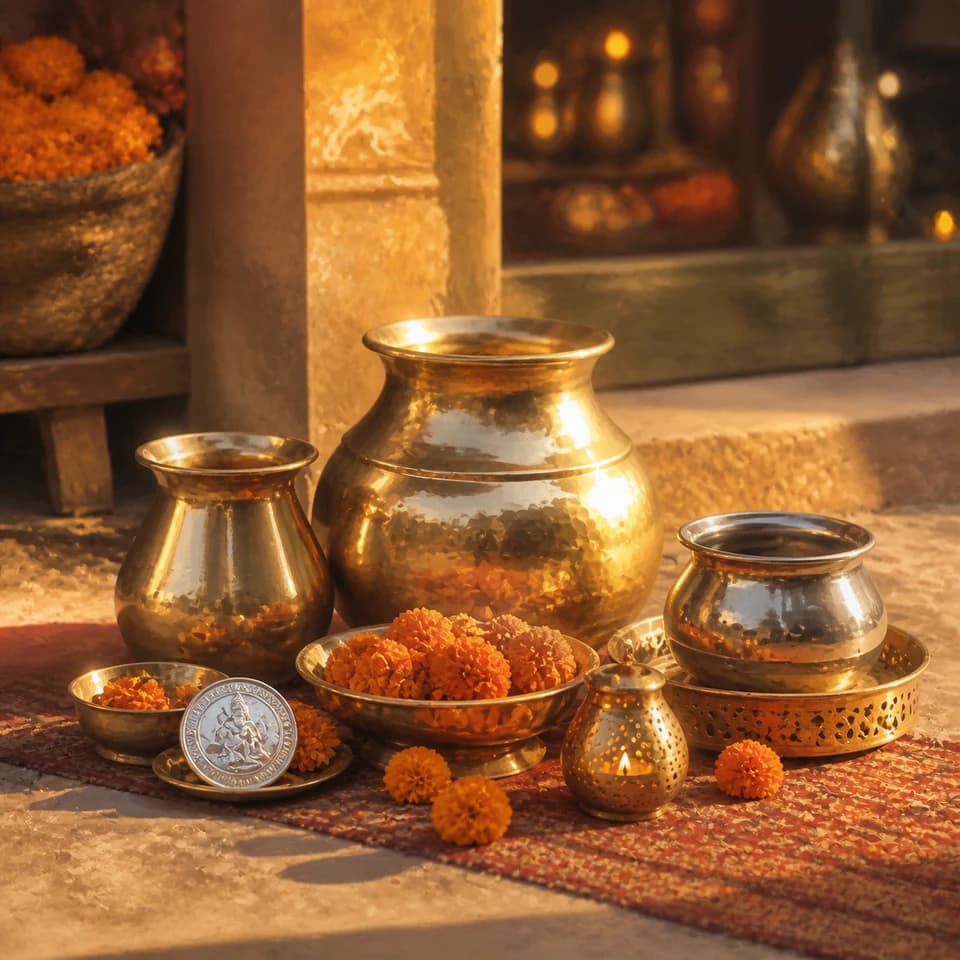
Dhanteras or Dhantrayodashi begins the Diwali observances in many communities. Traditions honour Dhanvantari for health, Lakshmi and Kubera for prosperity, and Yama Deepam for protection. Buying gold or utensils is customary, not compulsory.
What people do
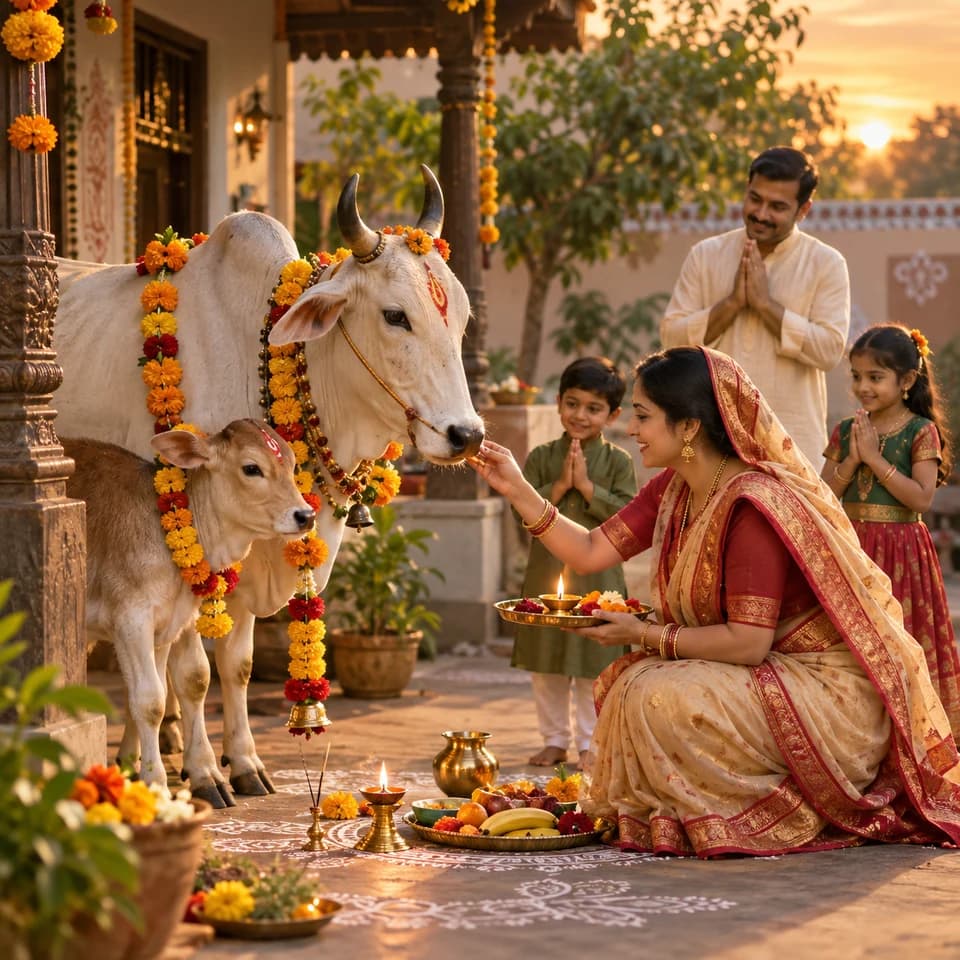
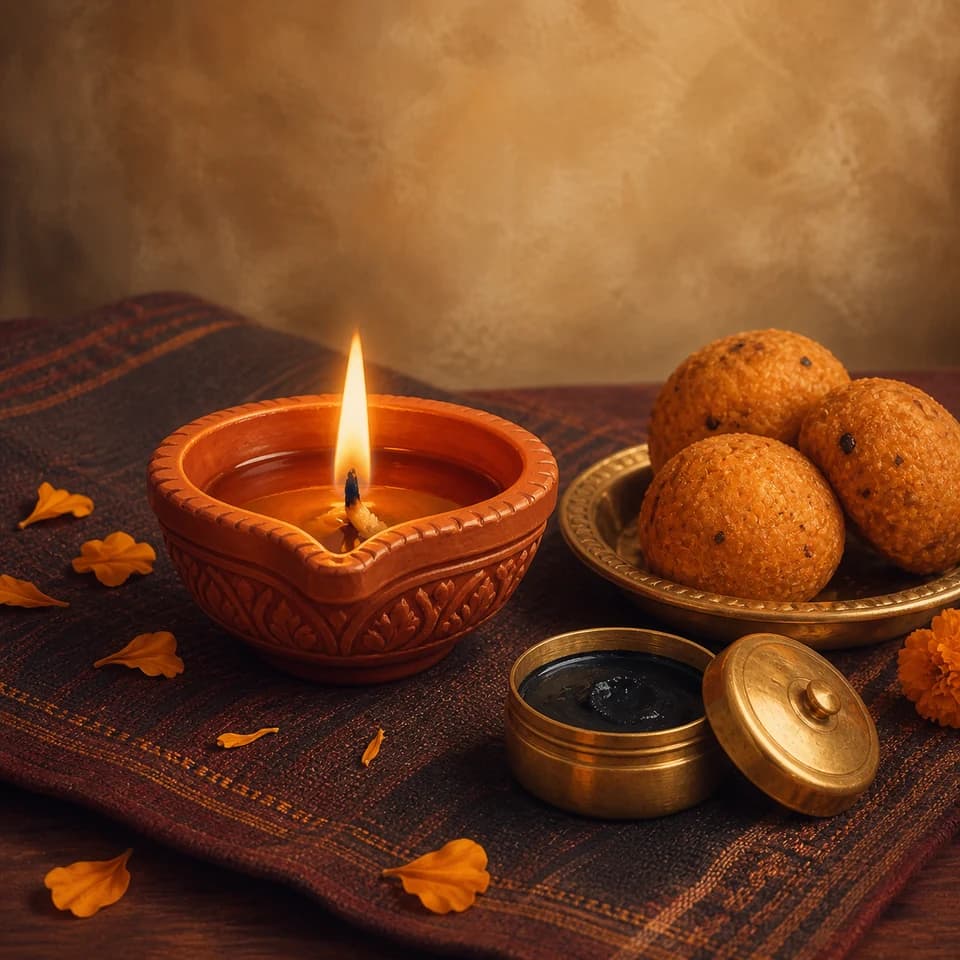
Many families worship Dhanvantari, Lakshmi and Kubera according to their custom. Cleaning the home, lighting lamps, buying a useful vessel and giving are common traditions. Some light a lamp outside in Yama’s name; this belongs to the distinct Yama Deep tradition. Buying something is not a required ritual. Remembering Dhanvantari also gives health a place in the festival.
Told differently elsewhere
Observed across much of India with regional differences in Dhanvantari worship, Lakshmi Puja, Yama Deepam and purchases of household utensils or valuables. India's National Ayurveda Day was formerly linked to Dhanteras but has been fixed on 23 September annually since 2025.
Questions people ask
- When is Dhanteras in 2031?
- On Wednesday, 12 November 2031 in India. Runs from 12 Nov 06:10 IST to 13 Nov 05:36 IST.
- Why does the date change every year?
- It is kept by the lunar calendar, so its day on the civil calendar moves from year to year.
- Is the date the same everywhere?
- Yes. It is kept everywhere on the day it falls on in India.
Dates in the coming years
- 2027Wednesday, 27 OctoberAso Vad 13 · Puja 18:06
- 2028Sunday, 15 OctoberAso Vad 13 · Puja 18:15
- 2029Sunday, 4 NovemberAso Vad 13 · Puja 18:00
- 2030Thursday, 24 OctoberAso Vad 13 · Puja 18:08
- 2031Wednesday, 12 NovemberAso Vad 13 · Puja 17:57
Last kept6 November 2026