Gudi Padwa as it was kept in 1992.
Next date: 7 April 2027Gudi Padwa 1992
Saturday, 4 April 1992, in Ahmedabad
FestivalIndian · Hindu
Panchang on the day
4
Saturday
Waxing First
until 10:42
Aries
- અA
- લLa
- ઈEe
- Sunrise
- 06:28
- Sunset
- 18:57
- Moonrise
- 06:49
- Nakshatra
- Ashwini
- until 05:45 next day
- Yoga
- Vaidhriti
- until 21:09
- Karana
- Bava
- until 10:42
- Rahu Kalam 09:35 to 11:09
- Yamaganda 14:16 to 15:50
- Abhijit muhurat 12:17 to 13:07
Why this date
Chaitra Waxing First, taken at sunrise
Runs from 3 Apr 10:31 IST to 4 Apr 10:42 IST.
In short
Gudi Padwa is Maharashtra’s traditional New Year. On Chaitra Shukla Pratipada, families welcome the new year by raising a decorated gudi outside their homes.
The story
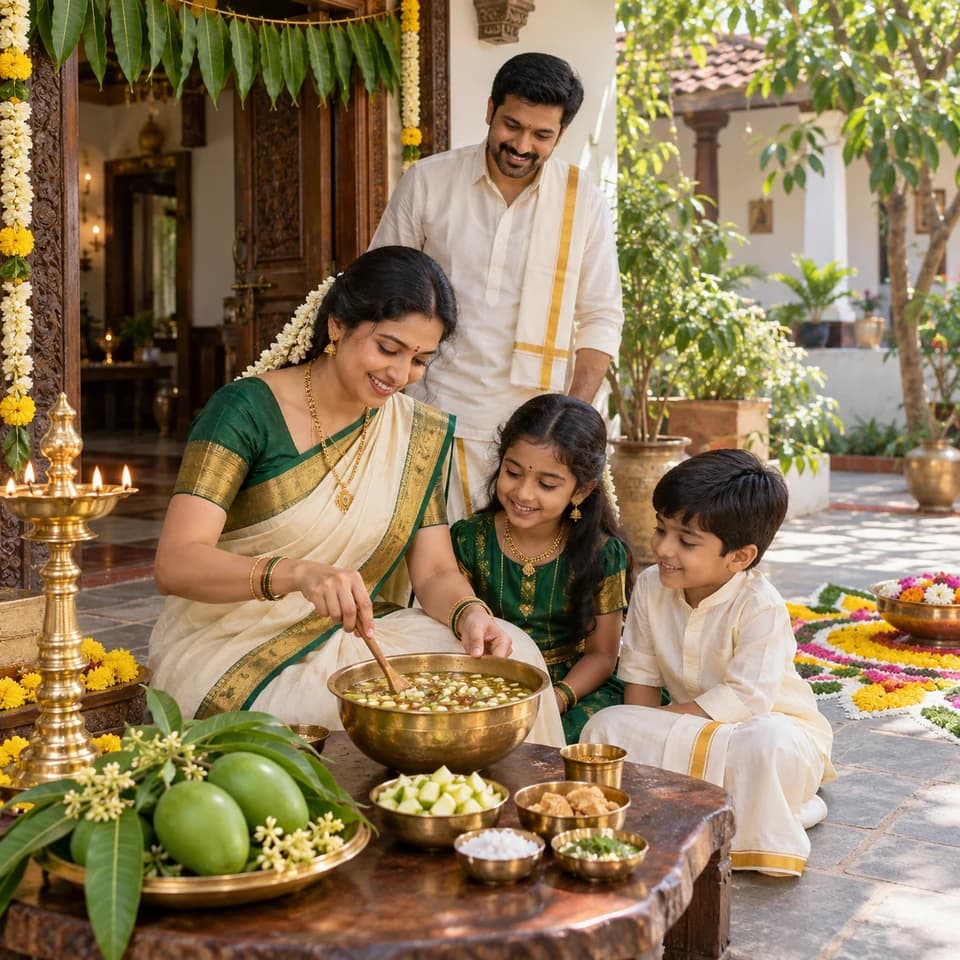
As spring arrives, fresh leaves appear on the trees and many homes in Maharashtra begin preparing to welcome a new year. This day, Chaitra Shukla Pratipada, is called Gudi Padwa. In the Marathi tradition, it begins the new year. People clean their homes, draw rangoli at the entrance and prepare to raise the gudi.
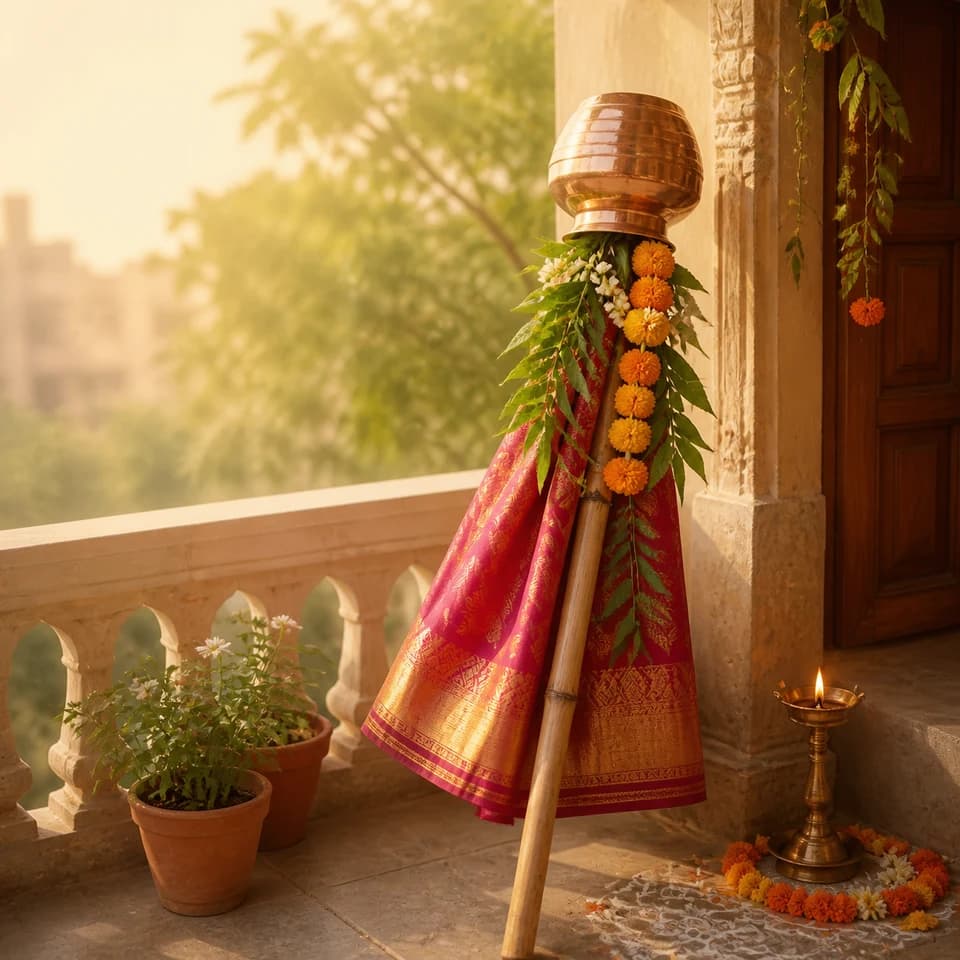
A beautiful cloth is tied to a long bamboo or pole. Flowers, neem leaves and a sugar garland are added, with an inverted copper or silver vessel at the top. This decorated pole is the gudi. It is raised outside the home or near a window so that it can be seen from a distance. The family worships it and shares prasad. The raised gudi is regarded as a sign of an auspicious beginning and victory.
More than one religious belief is associated with the gudi. In one tradition it is called Brahmadhwaj, the flag of Brahma. Another familiar tradition connects it with welcoming Rama back to Ayodhya after his victory over Ravana. These are different traditional understandings. Families remember these auspicious meanings in keeping with their own customs.
Some families taste a mixture of neem and jaggery on this day. Tasting bitterness and sweetness together recalls accepting both happiness and difficulty in life. A festive meal follows. Puran poli, puri with shrikhand and other dishes are prepared according to family custom.
The celebration extends beyond the home. Some cities in Maharashtra hold processions, traditional music and cultural programmes. The gudi outside the home and the shared celebrations express the joy of a new year. In this tradition, spring’s fresh appearance, good wishes for the household and hope for another good beginning come together.
Why it matters
The gudi represents auspiciousness, victory and a fresh beginning. Neem’s bitterness and jaggery’s sweetness recall accepting life’s different experiences with understanding.
What people do
Homes are cleaned and decorated with rangoli. The gudi is adorned with cloth, leaves, flowers, a sugar garland and an inverted metal vessel, and worshipped. Neem-jaggery prasad and festive meals follow household traditions.
Told differently elsewhere
Gudi Padwa is primarily the New Year of Maharashtra and Marathi communities. Telugu and Kannada communities have their own Ugadi traditions for the Chaitra new year. Gujarat’s Bestu Varas comes in Kartik after Diwali; the observances have distinct identities and customs.
Questions people ask
- When is Gudi Padwa in 1992?
- On Saturday, 4 April 1992 in India. Runs from 3 Apr 10:31 IST to 4 Apr 10:42 IST.
- Why does the date change every year?
- It is kept by the lunar calendar, so its day on the civil calendar moves from year to year.
- Is the date the same everywhere?
- Yes. It is kept everywhere on the day it falls on in Mumbai.
Dates in the coming years
- 2027Wednesday, 7 AprilChaitra Sud 1
- 2028Monday, 27 MarchChaitra Sud 1
- 2029Saturday, 14 AprilChaitra Sud 1
- 2030Wednesday, 3 AprilChaitra Sud 1
- 2031Monday, 24 MarchChaitra Sud 1
Last kept19 March 2026