Indira Ekadashi 2027
Sunday, 26 September 2027, in Ahmedabad
EkadashiGujarati · Hindu
Panchang on the day
26
Sunday
Waning Eleventh
until 19:49
Cancer
- ડDa
- હHa
- Sunrise
- 06:28
- Sunset
- 18:33
- Moonrise
- 02:16
- Nakshatra
- Pushya
- until 12:37
- Yoga
- Shiva
- until 14:34
- Karana
- Bava
- until 09:12
- Rahu Kalam 17:03 to 18:33
- Yamaganda 12:31 to 14:01
- Abhijit muhurat 12:06 to 12:55
Why this date
Bhadrapad Waning Eleventh, taken at sunrise
Runs from 25 Sep 22:31 IST to 26 Sep 19:49 IST.
In short
Indira Ekadashi is a Ekadashi vrat observed according to the Hindu calendar. Its date and customary practices can vary by region and local Panchang.
The story
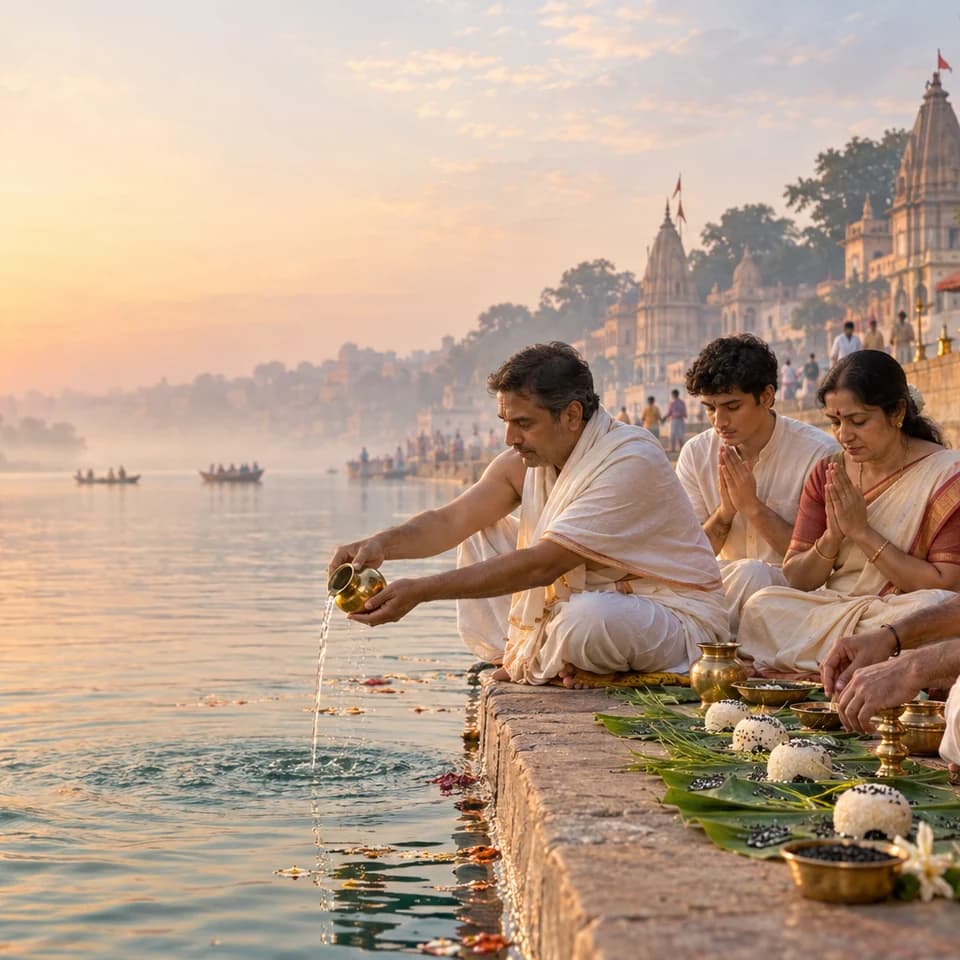
Indira Ekadashi is a Vishnu vrat observed during Pitru Paksha, the fortnight associated with remembrance of deceased ancestors. Its traditional mahatmya begins when Arjuna asks Krishna about the Ekadashi of the dark fortnight called Ashwin Krishna in the North Indian purnimanta calendar and Bhadrapada Krishna in Gujarati amanta reckoning. Krishna tells of King Indrasena of Mahishmati, a prosperous and devout ruler. One day Sage Narada arrives in his court and explains that he has seen the king's deceased father in Yama's realm, held there because an earlier religious obligation remained incomplete. The father asks that Indrasena keep the Indira Ekadashi vow and dedicate its merit to him.
Distressed, the king asks Narada for the proper observance. Narada describes preparation on Dashami, including bathing, ancestral rites and a disciplined meal. On Ekadashi the devotee worships Vishnu, makes a vow, offers prayers and may keep vigil through the night. The following Dwadashi includes prescribed charitable and concluding acts. Indrasena follows the instructions with his family, praying for his father's welfare. According to the katha, his father is released from Yamaloka and rises to a blessed abode. This is a religious narrative about filial remembrance and devotion, not verifiable evidence about the afterlife.
Families may honour ancestors through prayer, appropriate charity and established shraddha practices; an Ekadashi fast should not be presented as a substitute for every ancestral rite. The precise fasting day and Dwadashi parana window depend on local Smarta or Vaishnava rules, not merely a sunrise tithi. The traditional merit of the vow belongs to faith, while gratitude to one's forebears can also be expressed in compassionate conduct.
Why it matters
Falls inside Pitru Paksha, and is kept for the ancestors rather than for the keeper - the merit is assigned to the dead of the line, which is why it sits in that fortnight.
What people do
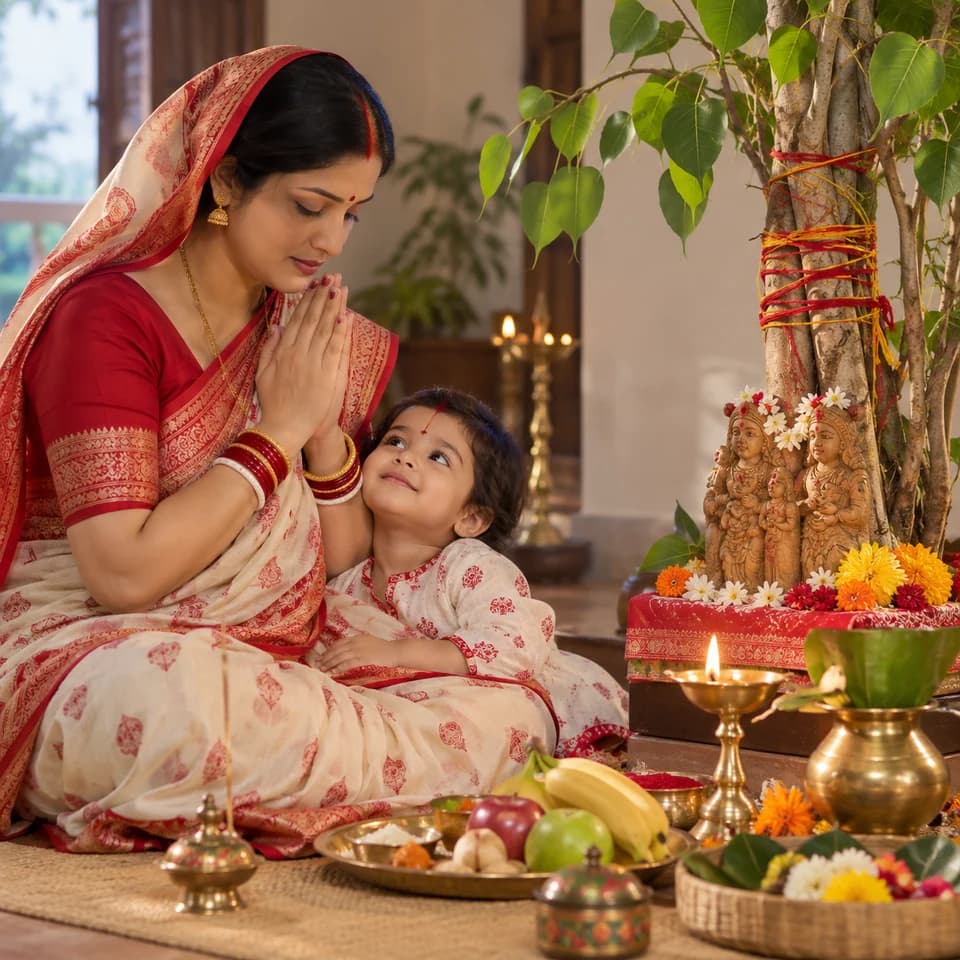
Worship Vishnu, remember ancestors through prayer and appropriate shraddha observances, and offer charity. Families may observe the Ekadashi fast according to their health and tradition, with Dwadashi parana at the locally calculated time.
Fasting
Bhadrapad's dark fortnight, inside Pitru Paksha. The merit is offered to the family's dead, and it is kept alongside the shraddha rather than instead of it.
Told differently elsewhere
In Gujarati amanta calendars the day is Bhadrapada Krishna Ekadashi; in many northern purnimanta calendars it is Ashwin Krishna Ekadashi. It falls during Pitru Paksha. Smarta and Vaishnava fasting and parana conventions may differ.
Questions people ask
- When is Indira Ekadashi in 2027?
- On Sunday, 26 September 2027 in India. Runs from 25 Sep 22:31 IST to 26 Sep 19:49 IST.
- Why does the date change every year?
- It is kept by the lunar calendar, so its day on the civil calendar moves from year to year.
- Is the date the same everywhere?
- Usually. Where sunrise falls at a different moment the day can differ by one, and the dates here are worked out for India.