Kartik Purnima as it falls in 2029.
Next date: 24 November 2026Kartik Purnima 2029
Wednesday, 21 November 2029, in Ahmedabad
Full moonGujarati · Hindu
Panchang on the day
21
Wednesday
Full Moon
until 09:32
Taurus
- બBa
- વVa
- ઉU
- Sunrise
- 06:55
- Sunset
- 17:54
- Moonrise
- 17:59
- Nakshatra
- Krittika
- until 19:54
- Yoga
- Parigha
- until 16:17
- Karana
- Bava
- until 09:32
- Rahu Kalam 12:25 to 13:47
- Yamaganda 08:18 to 09:40
Why this date
Kartik Full Moon, taken at sunrise
Runs from 20 Nov 07:02 IST to 21 Nov 09:32 IST.
In short
The full moon of Kartik is called Kartik Purnima. Many devotees bathe, light lamps and complete their Kartik vows. In traditions devoted to Shiva, it is also called Tripurari Purnima. That name is associated with the Mahabharata’s story of the three cities of Tripura.
The story
Once a great war broke out between the gods and the asuras on account of an asura named Taraka. The asuras were defeated. Taraka had three sons, Tarakaksha, Kamalaksha and Vidyunmali. After the defeat, the brothers began practising severe austerities. They followed their vows for a long time and devoted themselves to their practice. At last Brahma was pleased and told them to ask for a boon.
The brothers first asked that no living being should ever be able to kill them. Brahma said he could not grant that and told them to ask for something else. The three discussed it among themselves for a long time. They asked for three cities that could move about while they lived in them. Their condition was that they could meet their end only if the cities came together as one after a thousand years and a god pierced all three with a single arrow at that moment. Brahma granted the boon.
The brothers called on an asura named Maya, a skilled builder. For Tarakaksha he built a city of gold in heaven. For Kamalaksha he built a city of silver in the sky. For Vidyunmali he built a city of iron on earth. In the story, the cities were built so that they could move about. With their high walls, large gates, wide streets and palaces, the three were known together as Tripura.
Many asuras who had lost the earlier war came to live in these cities. Maya provided them with what they needed. Tarakaksha’s son Hari was powerful too. Through severe austerities he won a boon from Brahma. He used it to make a pool in his city. When asuras who had fallen in battle were placed in it, they came back to life in their former bodies and with greater strength. The strength of Tripura no longer fell when an asura died in battle.
The asuras grew proud of their boon and began laying waste to other cities. They drove the gods from their places and entered the sages’ hermitages. Indra went with the other gods and struck at the three cities with his thunderbolt. Their walls held. Indra and the gods went to Brahma, explained their trouble and asked how to stop Tripura.
Brahma reminded the gods that the cities had to be pierced with a single arrow when they came together. He said that Shiva could do it. Brahma, the gods and the sages went to Shiva. They bowed and praised him. Shiva put them at ease and asked what had brought them. Brahma told him about the boon he had given and asked him to protect the people from the asuras’ attacks.
Shiva first told the gods they would be stronger if they fought together. He offered to give them half his strength. They said they had seen how powerful the asuras were and could not even bear half of Shiva’s strength. They asked Shiva to take half of theirs and go himself. Shiva agreed, and the gods gave him half their strength. He then asked them to prepare a chariot, a bow and an arrow.
With Vishvakarma’s help, the gods built an extraordinary chariot. In the story, the earth with its mountains and forests formed its body. The Sun and Moon became its wheels, and the four Vedas became its four horses. Mount Meru became the flagstaff, and clouds filled with lightning became the banner. The year with its six seasons became Shiva’s bow, and his shadow became its string. The powers of Agni, Soma and Vishnu came together in one arrow.
When the chariot was ready, Shiva asked who would drive it. The gods thought Brahma was the right one to handle it and asked him to take the reins. Brahma agreed, climbed aboard and took the reins in his hands. Shiva stepped onto the chariot with his bow and arrow. The gods and sages praised him, and the Gandharvas played their instruments. Brahma set the horses in motion, and the chariot headed for Tripura.
As Shiva’s chariot came near, the roar of his bull rang out all around. Some asuras died when they heard it, and some of the others stood ready to fight. The chariot began to sink as though under a great weight. In the story, Vishnu emerged from the arrowhead as a bull and raised the chariot. Shiva placed the power of the Pashupata weapon on the arrow, set it to his bow and waited for the three cities to come together.
The moment he had been waiting for arrived. The three cities, which had been moving separately, joined as one. The gods and sages cried out in praise. Shiva drew his bow and released a single arrow. It pierced Tripura. The cities caught fire with the asuras inside and fell into the western sea.
Shiva put out the fire so it would not spread and burn the three worlds. The gods and sages were relieved. They thanked him and went back to their own places. Devotees remember Shiva as Tripurari, the one who brought Tripura to an end.
Why it matters
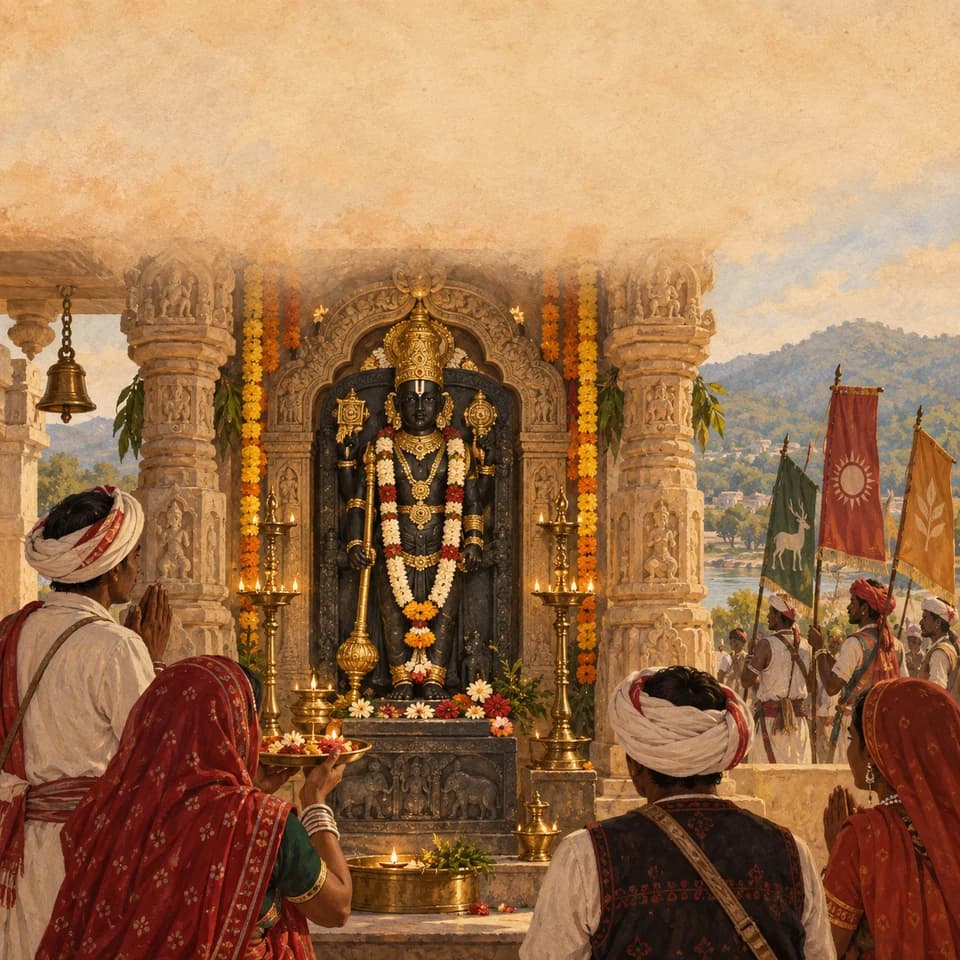
In traditions devoted to Shiva, Kartik Purnima recalls his victory over Tripura. In the story the asuras misuse the power they gain from their boon. The gods help one another face the danger. Lighting lamps and completing the Kartik vow are other traditions associated with the full moon.
What people do
Many devotees bathe in a river, lake or place of pilgrimage in the morning. Some visit a temple, offer lamps and give to others. Many who have kept a Kartik vow complete it on the full moon according to their own traditions. Families follow the local calendar and their own customs for worship and lighting lamps.
Told differently elsewhere
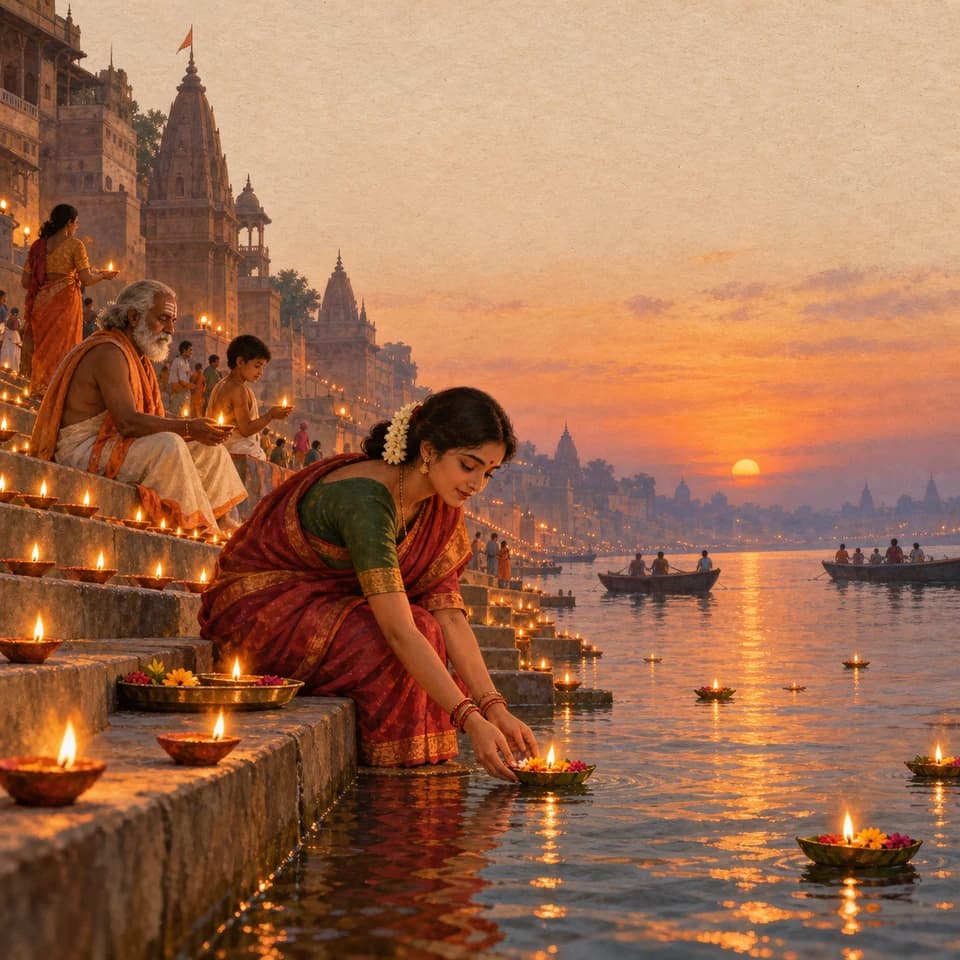
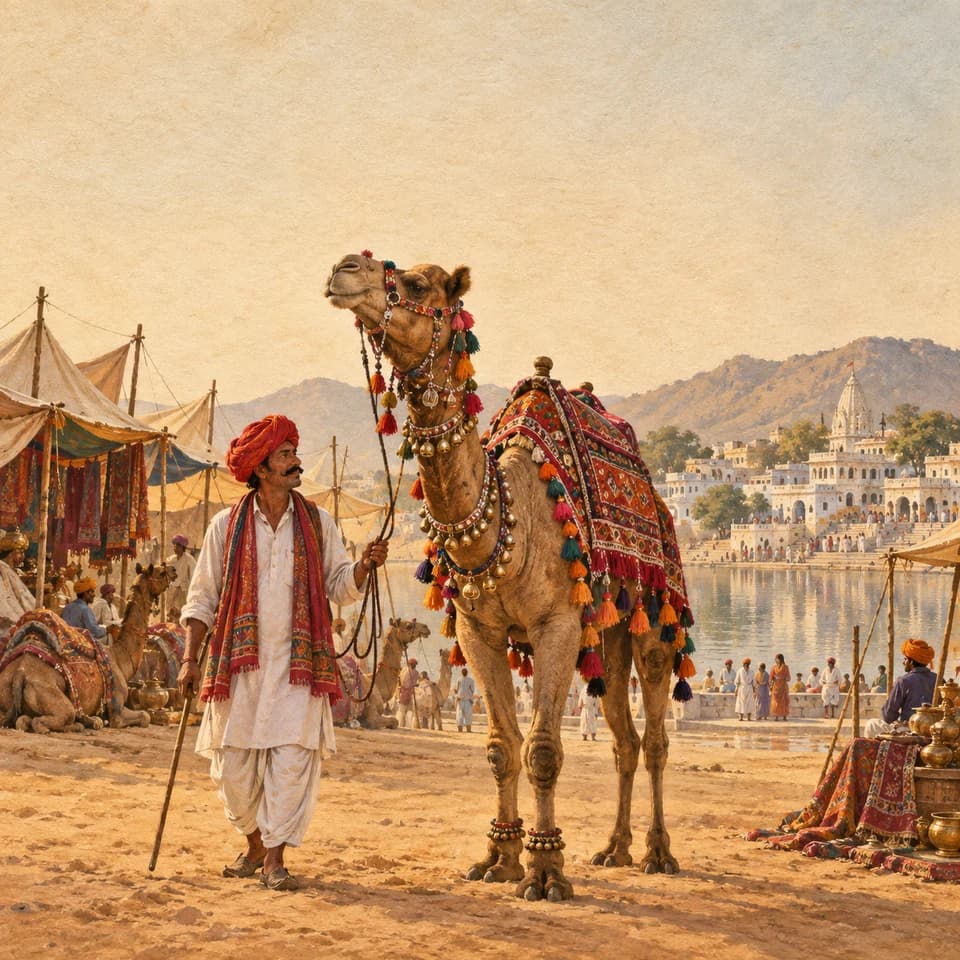
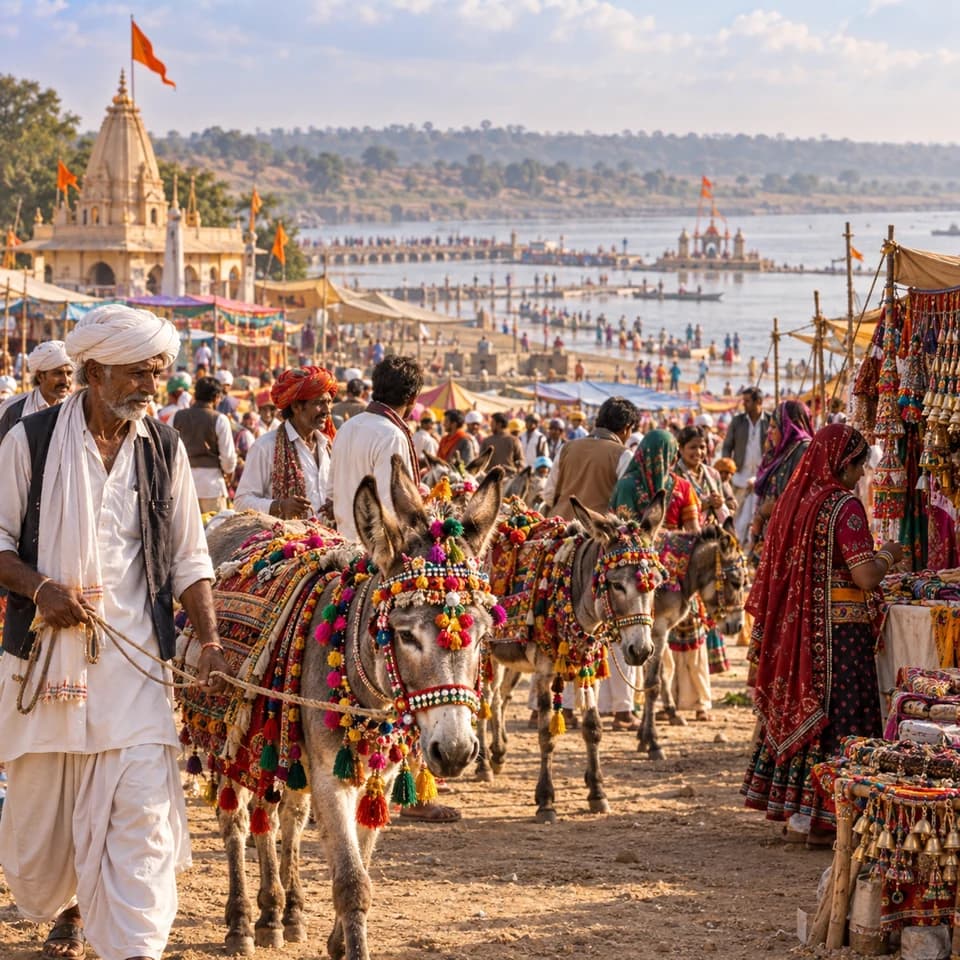
Varanasi celebrates Dev Deepawali on Kartik Purnima. In the evening, clay lamps are lit on the banks of the Ganga. In Gujarat, the Shamlaji fair runs from Kartik Shukla Ekadashi to the full moon. In Rajasthan, people go to Pushkar Lake to bathe and attend the fair.
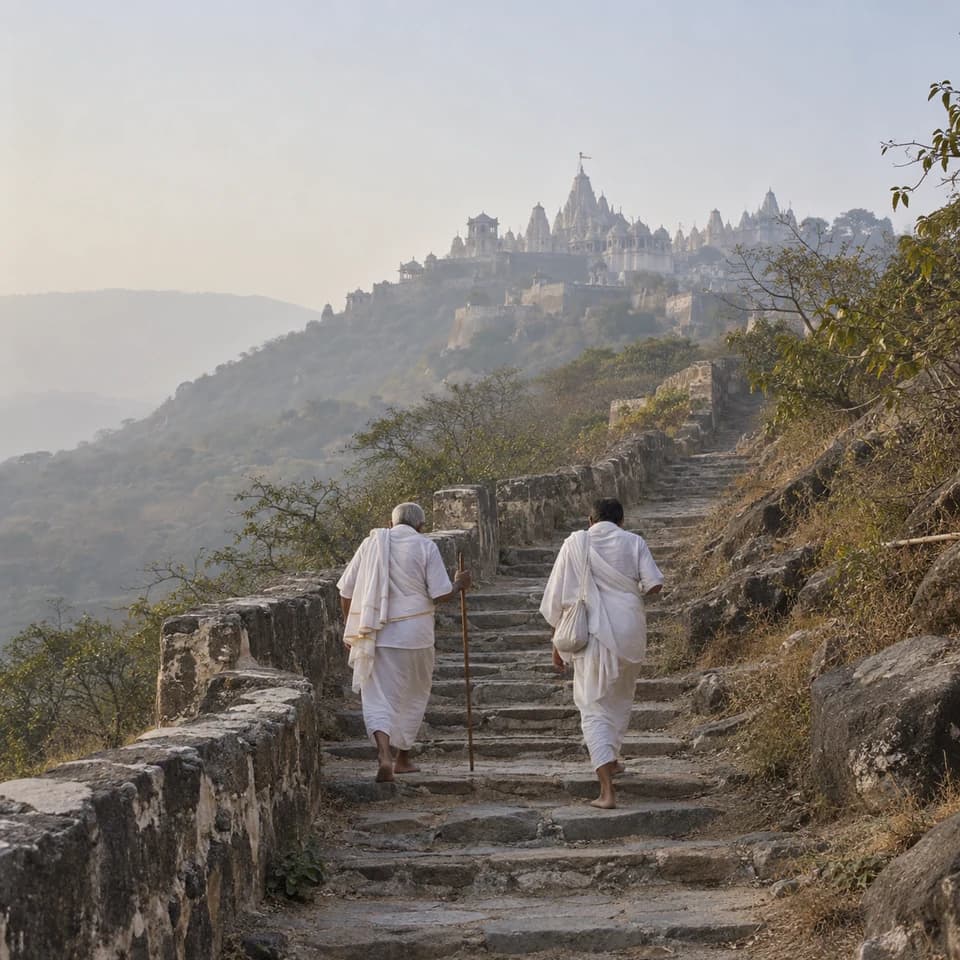
In Odisha, people float small boats in the water during Boita Bandana to remember old seafaring trade. Cuttack’s Bali Jatra fair begins on this full moon. In Jain tradition, pilgrimage to Shatrunjaya at Palitana resumes on this day after Chaturmas.
Many Sikh communities celebrate Guru Nanak Dev Ji’s Prakash Gurpurab on the full moon of Kartik. The Sikh festival has its own traditions. Kirtan is sung at gurdwaras and langar is served to all.
Questions people ask
- When is Kartik Purnima in 2029?
- On Wednesday, 21 November 2029 in India. Runs from 20 Nov 07:02 IST to 21 Nov 09:32 IST.
- Why does the date change every year?
- It is kept by the lunar calendar, so its day on the civil calendar moves from year to year.
- Is the date the same everywhere?
- Yes. It is kept everywhere on the day it falls on in India.