Kumbh Mela
FairIndian · Hindu
Maha Kumbh ; Ardh Kumbh
No rule yet
Nobody has written a rule for this observance yet, so the calendar does not put it on a day. A name with a made-up date beside it would be worse than a name on its own.
In short
Major Hindu pilgrimage gatherings at Prayagraj, Haridwar, Nashik and Ujjain.
The story
Kumbh Mela gathers Hindu pilgrims at Prayagraj, Haridwar, Nashik and Ujjain. Its most widely told sacred association begins with Samudra Manthana, the churning of the cosmic ocean. In the tradition, gods and asuras seek amrita, the nectar of immortality. Mount Mandara serves as a churning staff and the serpent Vasuki as a rope. The churning brings forth extraordinary treasures and dangers before Dhanvantari emerges carrying the vessel of nectar. Later pilgrimage retellings associate drops of amrita with the four Kumbh sites. This story gives the gathering spiritual meaning; it does not establish a verified historical origin for the festivals at these cities.
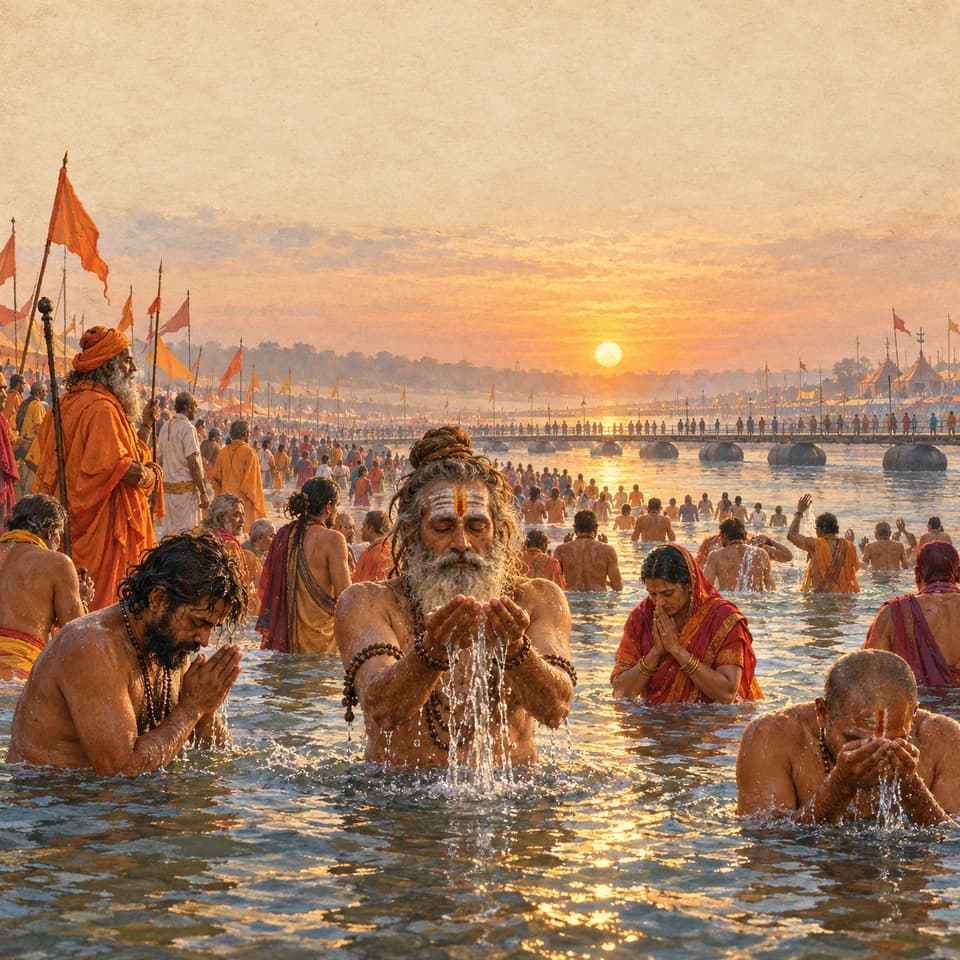
The four places each have their own river setting and pilgrimage traditions: the Sangam at Prayagraj, the Ganga at Haridwar, the Godavari at Nashik and the Shipra at Ujjain. Pilgrims attend sacred bathing days, pray, listen to discourses, offer service and seek the company of teachers and ascetics. The processions of the akharas are a prominent part of some major bathing observances. For many participants the journey also offers a chance to reflect on discipline, generosity and belonging to a larger spiritual community.
Kumbh dates depend on city-specific astronomical configurations involving Jupiter, the Sun and other calendar conditions. Terms such as Kumbh, Ardh Kumbh and Maha Kumbh must not be treated as interchangeable, and not every place follows one fixed twelve-year cycle. The event spans many days; the important bathing dates require separate verification. UNESCO has recognized Kumbh Mela as intangible cultural heritage.
Why it matters
Kumbh Mela is a major Hindu pilgrimage centred on sacred bathing, teaching, community and monastic traditions. Its dates depend on location-specific astrological conventions, not a single annual date rule.
What people do
Pilgrims participate in sacred bathing, prayers, charity, discourses and gatherings of ascetic orders. Principal bathing days and procession arrangements depend on the specific site and year.
Told differently elsewhere
Kumbh pilgrimages belong to four distinct river sites: Prayagraj at the Ganga-Yamuna Sangam, Haridwar on the Ganga, Nashik-Trimbakeshwar on the Godavari and Ujjain on the Shipra. Each has its own astrological reckoning and principal bathing dates. Ardh Kumbh and other named gatherings must be classified by location and year, not automatically generated as the same event every four or twelve years.