Onam as it falls in 2056.
Next date: 12 September 2027Onam 2056
Thursday, 24 August 2056, in Ahmedabad
FestivalIndian · Hindu
Panchang on the day
24
Thursday
Waxing Fourteenth
until 11:50
Capricorn
- ખKha
- જJa
- Sunrise
- 06:18
- Sunset
- 19:05
- Moonrise
- 18:42
- Nakshatra
- Shravana
- until 08:28
- Yoga
- Shobhana
- until 19:06
- Karana
- Vanija
- until 11:50
- Rahu Kalam 14:17 to 15:53
- Yamaganda 06:18 to 07:54
- Abhijit muhurat 12:16 to 13:07
Why this date
Shravana, while the sun is in Leo
Runs from 23 Aug 08:33 IST to 24 Aug 08:28 IST.
In short
Onam is Kerala’s celebration of a plentiful harvest and coming together. Its main festivities run from Atham to Thiruvonam in the Malayalam month of Chingam. In its well-known folk story, King Mahabali returns every year to meet his people. This is the Mahabali and Vamana story told in Kerala.
The story
In Kerala’s folk tradition, Mahabali is remembered as a king who dearly loved his people. He is also known as Maveli. Born into the Asura lineage, he was Virochana’s son and Prahlada’s grandson. He was devoted to Vishnu and generous in giving.
People lived happily in Mahabali’s kingdom. The king treated his subjects equally. The story describes his reign as a happy time without poverty, crime or cruelty. People loved their king, and his fame spread far and wide.
The gods grew concerned about Mahabali’s increasing fame and power. They feared losing their own authority. They went to Vishnu and asked him to help stop Mahabali. Vishnu then took the form of Vamana.
Once, Mahabali was performing a sacrifice, hoping to receive Vishnu’s grace. Vamana arrived there in the form of a small Brahmin boy. Seeing the child who had come to ask for a gift, the king asked what he wanted.
Vamana asked for as much land as he could cover in three steps. The generous Mahabali agreed to the request and promised the boy the land he had asked for.
Then Vamana began to grow. The seemingly small figure became so immense that his first two steps covered the earth and heaven. Not just the land the king had offered, but the whole world had been measured. There was no space left for the third step.
Mahabali now understood that the one standing before him was no ordinary Brahmin child. Vishnu himself had come as Vamana. He also saw that, with everything covered in two steps, he had no land left to give.
For the third step, Mahabali bowed before Vamana and offered his own head. With no land remaining, he was ready for the Lord to place his foot there. Vamana placed the third step on the king’s head and sent him to the underworld, Patala.
As he went to Patala, Mahabali made one request for his people. He wished to be allowed to return to Kerala once a year to meet them. He wanted to see whether they were still happy, had enough food and lived contentedly.
Vishnu was pleased with Mahabali’s generosity, devotion and humility. He accepted the king’s request and allowed him to return every year to meet his people. Though the king had gone to Patala, his connection with his homeland and its people continued.
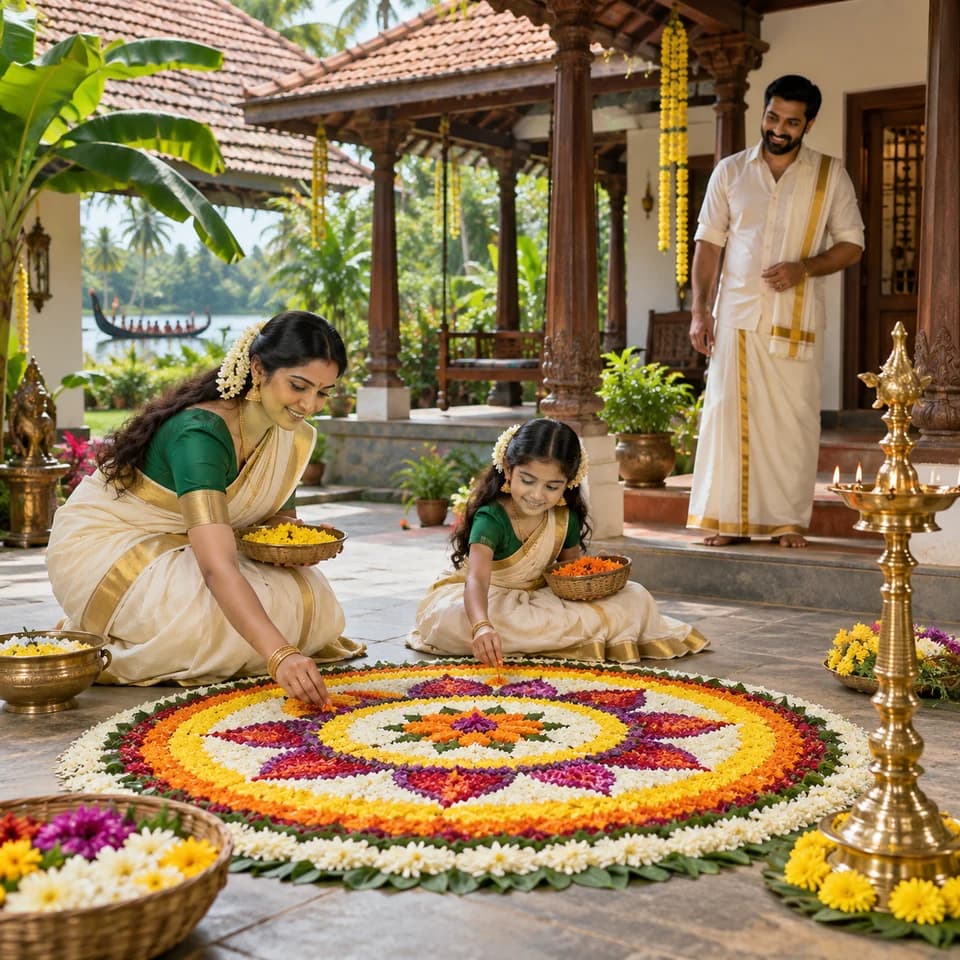
According to folk tradition, Mahabali visits his people on Thiruvonam in the month of Chingam. During Onam, people therefore prepare to welcome their beloved king. Homes are decorated with flowers, pookalam floral designs are made, and everyone celebrates together over a festive meal. The joy of Mahabali’s homecoming is part of the festival.
The temple tradition at Thrikkakara connects this episode of Mahabali and Vamana with its own sacred setting. It has a Vamana Moorthy temple where Onam is specially celebrated. In this Kerala story, the memory of Mahabali returning to his people comes alive again each year.
Why it matters
Mahabali’s story recalls love for one’s people, generosity and a happy life based on equality. Onam brings together the abundance of the harvest, the joy of meeting loved ones and sharing food. People from different religions and communities also join the celebration. Temple worship and the wider cultural festival both have their place.
What people do
From Atham, people begin making pookalam floral designs at homes and public places. Cleaning the home, wearing new clothes and celebrating with family are also part of Onam. Flower arrangements and worship practices differ between households and regions.
On Thiruvonam, a special feast called Onasadya is served. A traditional sadya includes rice, vegetarian dishes and sweets such as payasam on a banana leaf. Families and communities share the meal. The number of dishes and the food prepared at home are not identical everywhere.
Some places hold temple worship, dance, music, games and public events. Vallam Kali boat races are also associated with the festival season. Every boat race or cultural programme does not take place on Thiruvonam itself; people follow local schedules.
Told differently elsewhere
The Vamana Moorthy temple at Thrikkakara in Kerala’s Ernakulam is an important Onam centre. Its temple festival runs from Atham to Thiruvonam. In nearby Tripunithura, the Athachamayam procession is associated with the beginning of Onam.
In Thrissur’s Pulikali, performers paint their bodies like tigers and dance to drums. In parts of Malabar, the Onapottan folk figure visits homes as a symbol of Mahabali’s arrival. These regional customs are not the same throughout Kerala.
Malayali communities elsewhere in India and overseas also celebrate Onam. Pookalam, sadya and cultural events help them stay connected with their traditions. Celebrations are arranged according to family, local temple or community programmes.
Questions people ask
- When is Onam in 2056?
- On Thursday, 24 August 2056 in India. Runs from 23 Aug 08:33 IST to 24 Aug 08:28 IST.
- Why does the date change every year?
- It is kept by the lunar calendar, so its day on the civil calendar moves from year to year.
- Is the date the same everywhere?
- Yes. It is kept everywhere on the day it falls on in Kochi.
Dates in the coming years
- 2027Sunday, 12 SeptemberBhadrapad Sud 12
- 2028Friday, 1 SeptemberBhadrapad Sud 13
- 2029Wednesday, 22 AugustShravan Sud 13
- 2030Monday, 9 SeptemberBhadrapad Sud 12
- 2031Saturday, 30 AugustLeap Bhadrapad Sud 13
Last kept26 August 2026