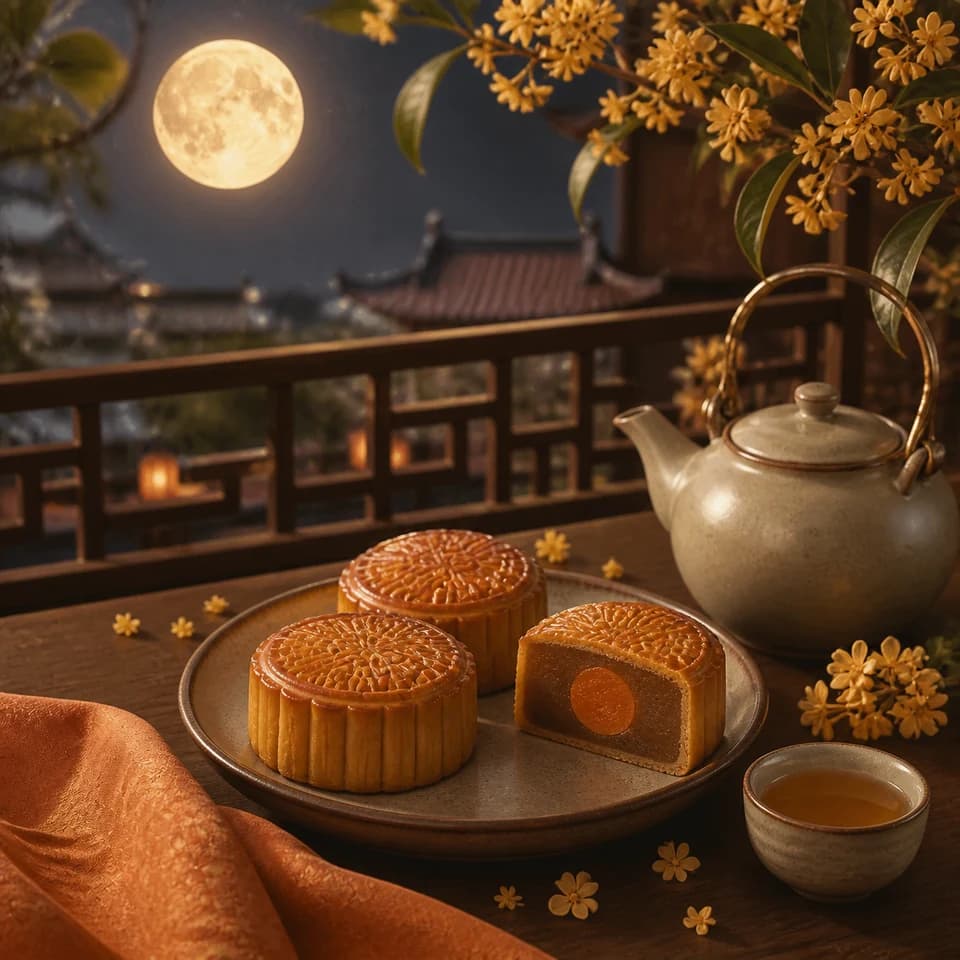
Mid-Autumn Festival
FestivalEast Asia · China
No rule yet
Nobody has written a rule for this observance yet, so the calendar does not put it on a day. A name with a made-up date beside it would be worse than a name on its own.
In short
Chinese eighth-lunar-month full-moon festival of family reunion, mooncakes, lanterns and the Chang'e legend.
The story
The Mid-Autumn Festival, or Zhongqiu Jie, is observed on the fifteenth day of the eighth month of the Chinese lunisolar calendar. Families gather to appreciate the autumn moon, share mooncakes and give thanks for the harvest. The round moon and round cakes symbolize reunion, especially when relatives live far apart. Lanterns, tea, fruit offerings and local performances add to the evening, although practices differ across Chinese regions and overseas communities.
One famous legend tells of the archer Hou Yi, who saves the world from excessive heat by shooting down nine of ten suns. His wife Chang'e later takes an elixir of immortality and rises to the moon, where the Jade Rabbit also appears in some tellings. Versions disagree about why she takes the elixir and whether her action is sacrifice, protection or a mistake. These are traditional stories that give emotional meaning to longing and separation, not a single verified historical account of the festival's origin. Moon appreciation and harvest celebrations developed over many centuries.
Related East Asian observances should not be collapsed into one festival: Vietnam's Tết Trung Thu is especially associated with children and lanterns, while Korea's Chuseok has its own ancestral rites and family customs; Japanese Tsukimi is a distinct moon-viewing tradition. The Chinese festival date needs the Chinese lunisolar calendar and cannot be calculated by a Hindu full-moon rule or fixed Gregorian date.
Why it matters
Celebrates reunion, gratitude for the harvest and the emotional bond between relatives separated by distance.
What people do
Share mooncakes, view the moon, gather for meals and display lanterns; rituals differ by region and family.
Told differently elsewhere
Chinese communities on lunar month eight, day fifteen. Vietnam's Tết Trung Thu, Korea's Chuseok and Japan's Tsukimi are related but distinct traditions.